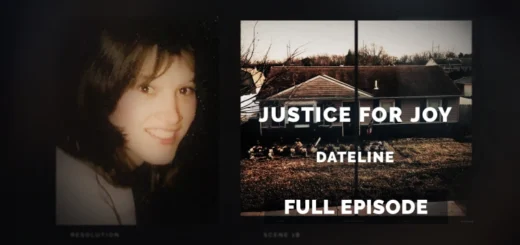
“She Didn’t Come Home”: Dateline Revisits Kathy Heckel’s Disappearance May 16 2026

Dateline NBC returns Saturday, May 16, 2026, at 9/8c with “She Didn’t Come Home,” a cold case episode reported by Josh Mankiewicz. The program examines the disappearance of Katherine “Kathy” Dolan Heckel, a Pennsylvania mother who vanished during a lunch break from her workplace in Lock Haven on July 15, 1991.
The case became one of Clinton County’s most haunting mysteries. Kathy’s body was never recovered, but investigators built a case around witness accounts, blood evidence, DNA testing, and the conduct of a coworker who had long been viewed as the central suspect.
- Who Is Kathy Heckel & What Happened to Her? May 16 2026
- Who Is Loyd Groves & Where Is He Now? May 16 2026
- “Murder Next Door”: 20/20 Reports on Kay Parsons Homicide May 15 2026
- Dateline NBC on May 15 2026 Revisits the Alex Murdaugh Case After Convictions Are Overturned
- “The Man with Two Names”: 48 Hours Revisits the Extraordinary Ted Maher Case May 16 2026
- 60 Minutes Reports on “Betting on War”, “The Knowledge” & “Christopher Nolan” on May 17 2026
Contents
- A Mother Leaves Work and Vanishes
- The Discovery of Kathy’s Car
- Suspicion Turns Toward Loyd Groves
- The Day Kathy Disappeared
- Blood Evidence and the Long Road to DNA
- A Cold Case Becomes a Murder Trial
- The Verdict and Sentence
- Kathy Heckel’s Family and the Cost of Waiting
- Why “She Didn’t Come Home” Matters
- More “She Didn’t Come Home”
- More Feature Articles
A Mother Leaves Work and Vanishes
Kathy Heckel was 40 years old and worked as a management secretary at International Paper in Lock Haven, Pennsylvania. On the day she disappeared, coworkers saw her leave the paper mill for lunch shortly before noon. She had spoken with her children before leaving and indicated she planned to run errands and eat lunch alone.
She never returned to work, and she never came home. Her family knew her disappearance did not fit the life she lived. Kathy was described as a reliable employee and a devoted mother who would not have left her children behind without contact.
The Discovery of Kathy’s Car
Several days after Kathy vanished, her silver 1990 Ford Festiva was found abandoned in the parking lot of Lock Haven Hospital. The car was discovered without any clear sign of where she had gone. The keys were missing, and the vehicle offered few answers.
The discovery deepened suspicion that Kathy had met with foul play. She had not accessed financial accounts, contacted family, or taken steps that suggested a planned disappearance. With no body and no crime scene, investigators faced a case built on fragments.
Suspicion Turns Toward Loyd Groves
Investigators focused on Loyd Groves, a married chemist who worked with Kathy at International Paper. Witnesses said Kathy and Groves had been involved in an affair and that Kathy had tried to end the relationship before she disappeared.
Friends later told investigators that Kathy had become afraid of Groves. She reportedly believed he was stalking her and had grown unsettled by his refusal to let the relationship end.
The Day Kathy Disappeared
On the morning of July 15, 1991, coworkers reported hearing a heated argument between Kathy and Groves inside the paper mill. Some accounts described Groves chasing Kathy through the plant.
Witnesses later placed Kathy and Groves together in his van before both vehicles left the property. Groves returned to work hours later, and coworkers described him as nervous and unsettled. His behavior after Kathy’s disappearance became part of the prosecution’s case decades later.
Blood Evidence and the Long Road to DNA
Police found traces of human blood inside Groves’ van, including on upholstery, a middle seat, and an interior light. At the time, forensic testing was limited, but the evidence remained important.
Years later, DNA testing confirmed the blood belonged to Kathy Heckel. That finding gave investigators a stronger foundation in a case that had long lacked a body, a confession, or a clear murder scene.
A Cold Case Becomes a Murder Trial
Groves was arrested in January 2015, nearly 24 years after Kathy disappeared. Prosecutors argued that he killed Kathy because she had become a threat to his life, marriage, and reputation.
At trial in 2018, the Commonwealth presented witness testimony, forensic evidence, and claims that Groves tried to create an alibi and feared arrest soon after Kathy vanished. The defense maintained that the evidence did not prove murder and that Groves was innocent.
The Verdict and Sentence
The jury acquitted Groves of first-degree murder but convicted him of third-degree murder. The verdict meant jurors found he was responsible for Kathy’s death, even without finding the specific intent required for first-degree murder.
Groves was sentenced to 10 to 20 years in state prison, the maximum sentence allowed for third-degree murder under Pennsylvania law at the time of Kathy’s disappearance. At sentencing, he denied committing the crime and maintained his innocence.
Kathy Heckel’s Family and the Cost of Waiting
For Kathy’s family, the conviction brought a measure of justice but not full closure. Her remains have never been found, leaving her loved ones without the chance to bury her or answer every question about what happened after she left work.
Kathy was declared legally dead on July 15, 1998, seven years after she vanished. Her children grew up without their mother, while the case remained open for decades before prosecutors secured a conviction.
Why “She Didn’t Come Home” Matters
“She Didn’t Come Home” revisits a case defined by absence: no body, no goodbye, and no full account of Kathy Heckel’s final moments. The Dateline episode is expected to focus on the affair, the workplace tension, the forensic breakthroughs, and the investigators who continued pursuing the case after many years.
The episode also highlights a central question in many no-body murder prosecutions: how far circumstantial evidence can carry a case when the victim has vanished. In Kathy Heckel’s case, a jury found that the answer was far enough to convict the man long suspected in her death.