
Who Was Talina Galloway & What Happened to Her? 2026 Update & Profile
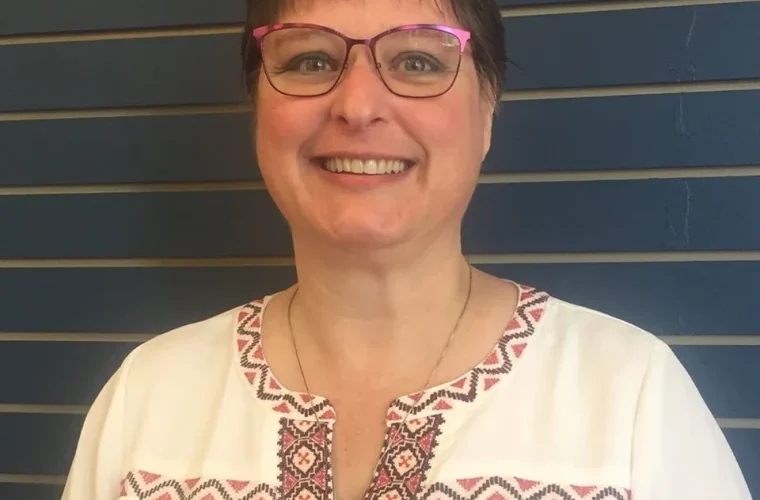
Talina Galloway disappeared from Wagoner, Oklahoma, in April 2020, during the first weeks of the COVID-19 pandemic. Her roommate, Kore Bommeli, told investigators that Talina had left their home after testing positive for coronavirus and receiving instructions to quarantine. What began as a missing-person investigation developed into a homicide case when authorities discovered that the account of Talina’s disappearance was contradicted by medical records.
For months, Talina’s family, friends and a community of online investigators searched for answers. Their efforts attracted public attention, but the search ended in tragedy when her remains were discovered in a wooded area near Mena, Arkansas, in January 2021. The medical examiner ruled her death a homicide.
Bommeli was arrested and charged with first-degree murder and desecration of a human corpse. Investigators also uncovered her criminal history in Wisconsin, where she had been convicted of attempting to poison two neighbours with ricin.
In September 2026, more than six years after Talina disappeared, Bommeli entered a no-contest plea to first-degree manslaughter and other offences. She received a combined 35-year Oklahoma prison sentence, bringing the criminal proceedings to a conclusion without a murder trial.
Talina’s story is featured in NBC’s Dateline episode “Heartless,” airing Friday, October 9, 2026, at 9 p.m. ET/8 p.m. CT. Correspondent Josh Mankiewicz revisits her disappearance, the investigation, the people who searched for her and the outcome of the case.
- “Heartless”: Dateline NBC Reports on Talina Galloway Homicide October 9 2026
- Who Is Kore Bommeli & Where Is She Now? 2026 Update & Profile
Contents
- Who Was Talina Galloway?
- Talina’s Life in Wagoner, Oklahoma
- The Day Talina Galloway Was Reported Missing
- The COVID-19 Explanation That Investigators Questioned
- The Search for Talina Galloway
- Talina’s Army and the Online Community That Searched for Her
- The Discovery of Talina Galloway’s Remains
- What Happened to Talina Galloway?
- The Roommate Who Became the Main Suspect
- The Discovery of Kore Bommeli’s Criminal Past
- The Criminal Case Following Talina’s Death
- The September 2026 Plea Deal
- The 35-Year Prison Sentence
- How Talina’s Family Responded to the Outcome
- Remembering Talina Beyond the Investigation
- Talina Galloway’s Story on Dateline NBC Heartless
- What Happened to Talina Galloway and Where the Case Stands in 2026
- More “Heartless”
- More Feature Articles
Who Was Talina Galloway?
Talina Galloway was a woman living in Wagoner County, Oklahoma, whose life became the subject of a major criminal investigation after she disappeared in April 2020. She shared a home with Kore Bommeli, the roommate who reported her missing and became the principal suspect in her death.
Talina had friends and people in her community who became concerned when she could not be located. Their involvement in the search would help bring public attention to her disappearance and keep her name in discussion throughout the investigation.
Her story unfolded during a period of extraordinary uncertainty. The United States was confronting the early stages of the coronavirus pandemic, and Oklahoma residents were adapting to health warnings, restrictions and concerns about infection.
Those circumstances became part of the explanation given for Talina’s disappearance. Investigators would have to determine whether she had left her home because of a medical concern or whether something else had happened.
Much of the public reporting about Talina has focused on the investigation and the woman charged in connection with her death. Details about her childhood, education, career and personal aspirations have received less coverage. The accounts of people who knew her, including those featured in Dateline, provide an opportunity to understand the woman whose disappearance affected their lives.
Talina’s Life in Wagoner, Oklahoma
Before her disappearance, Talina was living in Wagoner, a community in northeastern Oklahoma. She shared a residence with Kore Bommeli, an arrangement that would become central to the investigation into her death.
The two women were roommates, placing Bommeli among the people who had access to information about Talina’s home life and movements. When Talina could not be found, Bommeli became the person who contacted authorities.
Friends and acquaintances became involved as concern grew. Among those connected to the case were Kim Littlefield, Greg Thompson and Rachael Parker-Hall, who are interviewed in NBC’s examination of the disappearance.
Their participation reflects the network of people who wanted to understand what had happened to Talina. As investigators collected statements and examined evidence, those who knew her faced the uncertainty of not knowing whether she was safe.
The search would continue for months, transforming what began as a local missing-person case into an investigation that crossed state lines.
The Day Talina Galloway Was Reported Missing
On April 17, 2020, Kore Bommeli reported Talina missing to authorities in Wagoner County. The report began the formal search for Talina and introduced investigators to the explanation Bommeli provided about her absence.
According to law enforcement, Bommeli claimed Talina had tested positive for COVID-19 and had been instructed by a doctor to quarantine. She said Talina left their home following that medical advice.
The explanation appeared connected to the public health emergency affecting the country. At the time, coronavirus testing, quarantine procedures and concerns about exposure were major issues for communities across the United States.
Investigators needed to establish whether Talina had received a diagnosis, spoken with a doctor or sought medical treatment. Those details were important because they could help determine why she might have left home and where she might have gone.
The account supplied by Bommeli became one of the first significant issues examined during the investigation.
The COVID-19 Explanation That Investigators Questioned
As deputies examined Talina’s disappearance, they attempted to verify the medical information Bommeli had provided. The investigation involved checking whether Talina had received coronavirus testing or been instructed to quarantine.
Authorities determined that Talina had not been screened at a hospital and had no documented contact with the doctor referenced in Bommeli’s account. Those findings contradicted the explanation given when she was reported missing.
The discrepancies raised questions about whether Talina had left home for the reason Bommeli described. Investigators began examining the reliability of the information supplied by her roommate.
The contradiction did not establish what had happened to Talina, but it meant the reported medical explanation could not be supported by the records authorities obtained.
The timing of the disappearance added to the difficulty faced by people searching for her. The pandemic had disrupted routines and created uncertainty about where people could travel, receive medical treatment or isolate from others.
For Talina’s family and friends, the lack of reliable information meant the search continued without a confirmed explanation for her absence.
The Search for Talina Galloway
The Wagoner County Sheriff’s Office investigated Talina’s disappearance, collecting information from people who knew her and examining the circumstances surrounding the missing-person report.
Lt. Danny Elliott and investigator Joel Weber became central figures in the case. Their work would continue through the discovery of Talina’s remains and the criminal proceedings that followed.
Investigators sought to establish Talina’s last known movements and determine whether she had left voluntarily or become the victim of a crime. The absence of confirmed information about her whereabouts complicated those efforts.
Friends and members of the public followed developments and shared concerns about the case. The search attracted attention through online communities, where people discussed available information and sought answers.
The investigation remained unresolved throughout 2020. As the months passed, the people who cared about Talina continued waiting for news.
Talina’s Army and the Online Community That Searched for Her
One of the distinctive aspects of Talina’s disappearance was the involvement of an online community known as “Talina’s Army.” The group consisted of people who followed the case and wanted answers about the missing Oklahoma woman.
Members used social media and other online platforms to discuss developments, examine available information and maintain attention on the investigation.
Internet sleuth Jess Trevino is among those interviewed for NBC’s Dateline episode “Heartless.” The programme examines the role of online investigators and the influence of public participation in the search.
The involvement of Talina’s Army demonstrated how missing-person cases can attract people outside the victim’s immediate community. The group helped keep her name in public discussion during a period when investigators had not established what had happened.
Online investigations can raise questions about the reliability of information and the distinction between verified evidence and public speculation. Law enforcement remained responsible for collecting evidence and determining whether criminal charges were justified.
For people who wanted Talina found, the search became a sustained effort to obtain answers about her disappearance.
The Discovery of Talina Galloway’s Remains
In January 2021, approximately nine months after Talina was reported missing, human remains were discovered in a wooded area near Mena, Arkansas.
The location was in Polk County, across the state line from Oklahoma. Authorities identified the remains as belonging to Talina Galloway, bringing the search for the missing woman to a tragic conclusion.
The medical examiner determined that Talina’s death was a homicide. The finding confirmed that her disappearance involved a fatal crime rather than a voluntary departure or an unexplained absence.
The location of the remains raised questions about how Talina’s body had reached Arkansas. Investigators examined the evidence connecting the discovery to the circumstances of her disappearance in Wagoner County.
Authorities also investigated the treatment of her body. Prosecutors alleged that Bommeli had dismembered Talina’s remains, an allegation that became part of the criminal case.
The discovery provided answers about Talina’s fate, but it also marked the beginning of a lengthy prosecution that would continue for more than five years.
What Happened to Talina Galloway?
Investigators concluded that Talina Galloway had been killed and that her remains had been transported from Oklahoma to Arkansas. The medical examiner classified her death as a homicide.
Kore Bommeli, the roommate who had reported Talina missing, became the principal suspect. Authorities examined the inconsistencies in her account of Talina’s departure and gathered evidence concerning the circumstances of her death.
Following the discovery of Talina’s remains in January 2021, Bommeli was arrested and charged with first-degree murder and desecration of a human corpse.
The original prosecution alleged that Bommeli was responsible for Talina’s killing and the treatment of her body. The case included allegations that the remains had been dismembered.
The publicly reported September 2026 plea agreement does not provide a complete account of Talina’s final moments, including a confirmed method of killing or a precise reconstruction of the fatal events. Those details should not be inferred from the charges or the homicide ruling.
What authorities established was that Talina had died as a result of a homicide and that her remains were found concealed in a wooded area in Arkansas.
The Roommate Who Became the Main Suspect
Kore Bommeli occupied a central position in the case from the beginning because she was the person who reported Talina missing. Her account of the disappearance became a focus of the investigation when authorities found contradictions in the medical explanation she provided.
The relationship between the two women placed Bommeli among those with knowledge of Talina’s living arrangements and circumstances before she vanished.
Following the discovery of Talina’s remains, investigators pursued criminal charges against Bommeli. The first-degree murder charge reflected the prosecution’s belief that she was responsible for Talina’s death.
The case continued through the Oklahoma courts for several years. Bommeli contested the allegations and maintained that she had not killed her roommate.
Her attorneys would repeat that position in September 2026, even after she agreed to resolve the prosecution through a no-contest plea.
The distinction between the allegations, the plea and the criminal judgment became important to understanding the legal outcome.
The Discovery of Kore Bommeli’s Criminal Past
As the investigation developed, authorities uncovered Bommeli’s involvement in a separate attempted-murder case in Wisconsin.
The Wisconsin case concerned allegations that Bommeli had attempted to poison two neighbours with ricin in 2014. Ricin is a toxic substance that can cause severe illness or death.
Bommeli was convicted of two counts of attempted first-degree intentional homicide in connection with the poisoning case. She received a 35-year prison sentence.
The Wisconsin convictions were separate from Talina’s death. Public reporting does not establish that ricin was involved in Talina’s homicide.
The earlier case became relevant because Bommeli was subject to a substantial prison sentence in another state while the Oklahoma prosecution remained pending.
It would also influence the sentencing arrangements reached when the case concerning Talina’s death was resolved in September 2026.
The Criminal Case Following Talina’s Death
After Bommeli’s arrest in January 2021, Oklahoma prosecutors pursued charges connected to Talina’s homicide and the handling of her remains.
The proceedings continued for more than five years. Investigators and prosecutors prepared evidence, while the defence challenged the allegations and maintained Bommeli’s innocence.
The case involved serious criminal charges, including first-degree murder. A conviction on the original charge could have resulted in a substantial prison sentence.
By September 2026, the case was scheduled to go before a jury in Wagoner County. Witnesses and investigators were expected to provide testimony about Talina’s disappearance, the discovery of her remains and the evidence gathered against Bommeli.
The trial did not proceed. Prosecutors and defence attorneys reached an agreement shortly before the scheduled proceedings.
The decision brought an end to the Oklahoma prosecution without a jury being asked to determine whether Bommeli was guilty of first-degree murder.
The September 2026 Plea Deal
In early September 2026, Kore Bommeli entered a no-contest plea to three criminal charges connected to Talina’s death.
The original first-degree murder charge was amended to first-degree manslaughter. Bommeli entered no-contest pleas to that offence, desecration of a human corpse and possession of a firearm after a former felony conviction.
Eleven other counts were dismissed as part of the agreement. The plea resolved the case without a full criminal trial.
A no-contest plea allows a defendant to accept the imposition of a criminal judgment without formally admitting the allegations in the same manner as a guilty plea.
Bommeli’s defence maintained that she was not responsible for Talina’s death. Attorney Bryan Cannonie told NBC affiliate KJRH that his client remained firm in her denial.
District Attorney Jack Thorp said prosecutors had consulted Talina’s family before offering the agreement. He explained that the family supported bringing the case to a conclusion.
The resolution established criminal convictions and a prison sentence while leaving Bommeli’s stated denial of responsibility unchanged.
The 35-Year Prison Sentence
The Oklahoma court imposed a combined 35-year prison sentence following Bommeli’s September 2026 no-contest plea.
She received 28 years for first-degree manslaughter, with credit for time served and earned since February 3, 2021. That sentence was ordered to run concurrently with her Wisconsin sentence.
For desecration of a human corpse, Bommeli received seven years to be served consecutively. She received another five years for possession of a firearm after a felony conviction, with that sentence ordered to run concurrently.
The concurrent and consecutive provisions determined how the penalties would operate alongside the prison sentence imposed in Wisconsin.
Oklahoma authorities stated that Bommeli would serve her sentence in Wisconsin. The exact release date was not established in the reporting surrounding the plea.
The agreement provided a legal resolution to Talina’s case more than six years after she was reported missing.
How Talina’s Family Responded to the Outcome
Talina’s family had spent years waiting for the criminal proceedings to reach a conclusion. Her disappearance in April 2020 had led to months of uncertainty before the discovery of her remains in January 2021.
The prosecution that followed continued through multiple years of court proceedings. The scheduled September 2026 trial represented the prospect of a jury hearing the evidence and reaching a verdict.
District Attorney Jack Thorp said the family had been consulted before prosecutors offered Bommeli a plea agreement. According to his comments, the family supported the proposed resolution.
The decision avoided a trial and established a manslaughter conviction with a substantial prison sentence. It also meant the original first-degree murder charge would not be decided by a jury.
For those who knew Talina, the legal outcome came after years of grief and uncertainty. The agreement concluded the criminal case, but it could not reverse the loss of her life.
Remembering Talina Beyond the Investigation
Talina Galloway’s name became associated with a missing-person search, a homicide investigation and the criminal history of the woman accused of killing her.
The case attracted public attention because of the pandemic-related explanation for her disappearance, the discovery of her remains in another state and the involvement of online investigators.
Those circumstances form an important part of the story, but they do not define the entirety of Talina’s life. She was a woman with personal relationships and a place within her community before the events of April 2020.
Friends and people who followed the investigation continued seeking answers throughout the months when her whereabouts remained unknown.
The attention surrounding her disappearance reflected the concern of people who wanted to understand what had happened and see the case resolved.
Her story remains one of a life lost, a prolonged search and the efforts of investigators and prosecutors to establish criminal accountability.
Talina Galloway’s Story on Dateline NBC Heartless
NBC’s Dateline revisits the case in “Heartless,” airing Friday, October 9, 2026, at 9 p.m. ET/8 p.m. CT.
Correspondent Josh Mankiewicz examines Talina’s disappearance, the account provided by her roommate, the investigation and the legal proceedings that resulted in Bommeli’s September 2026 plea.
The programme features interviews with people connected to Talina, including friends Kim Littlefield, Greg Thompson and Rachael Parker-Hall.
Investigators Lt. Danny Elliott and Joel Weber discuss the case, while District Attorney Jack Thorp and defence attorneys Rachel Dallis and Ryan Cannonie provide perspectives on the prosecution and its outcome.
The episode also explores the involvement of Talina’s Army, with internet sleuth Jess Trevino discussing the online community that followed the disappearance.
Viewers can watch the two-hour programme on NBC, with Peacock streaming availability subject to the platform’s release schedule.
What Happened to Talina Galloway and Where the Case Stands in 2026
Talina Galloway was reported missing from Wagoner, Oklahoma, on April 17, 2020. Her roommate claimed she had left after receiving a positive COVID-19 test and instructions to quarantine, but investigators found no medical records supporting that account.
In January 2021, Talina’s remains were discovered in a wooded area near Mena, Arkansas. The medical examiner ruled her death a homicide.
Kore Bommeli was charged with first-degree murder and desecration of a human corpse. The prosecution continued for more than five years before a plea agreement was reached in September 2026.
Bommeli entered no-contest pleas to first-degree manslaughter, desecration of a human corpse and possession of a firearm after a felony conviction. She received a combined 35-year Oklahoma prison sentence, structured alongside her existing Wisconsin sentence for attempted murder.
The agreement ended the Oklahoma prosecution without a murder trial. Bommeli maintained her denial of responsibility, while the criminal judgment established the manslaughter and related convictions.
For Talina’s family, friends and those who followed the investigation, the resolution came more than six years after she disappeared. Her story remains a reminder of the human loss behind a case that attracted national attention and the years required to bring the criminal proceedings to an end.
More “Heartless”
- “Heartless”: Dateline NBC Reports on Talina Galloway Homicide October 9 2026
- Who Was Talina Galloway & What Happened to Her? 2026 Update & Profile
- Who Is Kore Bommeli & Where Is She Now? 2026 Update & Profile



2 Responses
[…] Who Was Talina Galloway & What Happened to Her? 2026 Update & Profile […]
[…] Who Was Talina Galloway & What Happened to Her? 2026 Update & Profile […]