
Who Is Kevin Ellis & Where Is She Now? 2026 Update & Profile
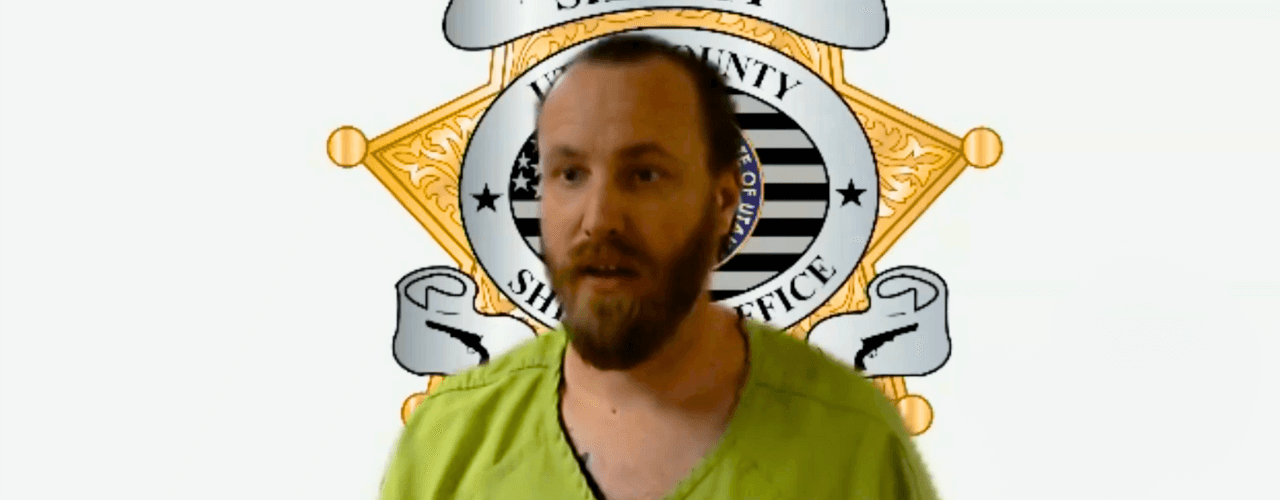
Kevin Stanley Ellis became the gunman at the centre of the Utah murder case featured in Dateline NBC’s “The Family Plot” after shooting his brother-in-law, Matthew “Matt” Restelli, seven times inside his mother’s American Fork home.
Ellis never disputed that he fired the shots that killed Matthew on July 12, 2024. His defence was that he believed Matthew was armed with a knife and that he acted to protect himself and his family. Prosecutors presented a different account: Matthew had been drawn from California to Utah under false pretences, his arrival had been tracked, and the knife used to support the self-defence claim had been placed with him after he was shot.
A Utah jury reached a mixed verdict in January 2026. It convicted Ellis of murder and rejected his claim that the killing was justified, but it acquitted him of conspiracy to commit murder. Two months later, a judge sentenced him to consecutive prison terms, including 15 years to life for murder.
As of September 2026, Ellis remains a Utah state prisoner. His sentence exposes him to decades behind bars, and there is no fixed release date.
- “The Family Plot”: Dateline NBC Reports on Matt Restelli Homicide September 26 2026
- Who Was Matt Restelli & What Happened to Him? 2026 Update & Profile
- Who Is Kathryn Restelli & Where Is She Now? 2026 Update & Profile
- Who Is Tracey Grist & Where Is She Now? 2026 Update & Profile
Contents
- Who Is Kevin Ellis?
- Matthew Restelli Was Ellis’s Brother-in-Law
- Kathryn Leaves Matthew and Moves to Utah
- Kathryn Said the Family Discussed Killing Matthew
- The AirTag and Matthew’s Journey to Utah
- Matthew Arrives at the House
- Ellis Said He Was Acting in Self-Defence
- The Knife Became a Major Problem for the Defence
- Why Ellis Was Charged With Murder
- Ellis’s Case Is Separated From His Mother’s
- Kathryn Testifies Against Her Brother
- Ellis Did Not Deny Pulling the Trigger
- The Jury Convicts Ellis of Murder
- Ellis Is Acquitted of Conspiracy
- Why the Verdict Was Not a Contradiction
- A Jail Call Changes the Picture
- “I Should Have Said No”
- Judge Griffin Calls the Killing Premeditated
- Matthew’s Family Addresses Ellis
- Ellis Does Not Give a Sentencing Statement
- Kevin Ellis’s Sentence
- What Does 15 Years to Life Mean for Ellis?
- Where Is Kevin Ellis Now?
- Could Kevin Ellis Ever Be Released?
- The Conspiracy Acquittal Still Matters
- How Ellis’s Case Differed From His Mother’s
- The Gunman at the Centre of “The Family Plot”
- Where Kevin Ellis’s Story Stands Today
- More “The Family Plot”
- More Feature Articles
Who Is Kevin Ellis?
Kevin Ellis is the brother of Kathryn Restelli and the son of Tracey Grist.
Those relationships placed him inside the family conflict that surrounded Matthew and Kathryn’s marriage in 2024. Kathryn had left the couple’s California home with their children and travelled to stay with Grist in American Fork, Utah. Ellis was at Grist’s home when Matthew arrived several weeks later.
Ellis was not a peripheral figure in what happened next. He was the person who fired the gun.
After Matthew entered the house, Ellis shot him seven times. He later acknowledged firing every shot and built his defence around why he believed the shooting was necessary.
The case against Ellis therefore differed from the cases against Kathryn and Grist. Prosecutors did not need to prove who pulled the trigger. Ellis had already admitted that.
The dispute was whether he had committed murder or acted in lawful self-defence.
Matthew Restelli Was Ellis’s Brother-in-Law
Matthew had been married to Ellis’s sister Kathryn.
The two men were therefore connected through years of family life before the shooting.
Matthew’s relatives later said he had made an effort to treat Ellis as family. At sentencing, Matthew’s brother described the betrayal of seeing a man Matthew had trusted become the person who killed him.
That relationship added another dimension to the prosecution case.
This was not a stranger encountering an unknown man in the middle of the night.
Ellis knew Matthew.
Matthew knew Ellis.
And Matthew had travelled to the house believing he was there to reunite with Kathryn and bring his family home.
Kathryn Leaves Matthew and Moves to Utah
The circumstances leading to the shooting began with the breakdown of Matthew and Kathryn’s marriage.
Kathryn left California in June 2024 and travelled to Utah with the couple’s young children. She stayed at the American Fork home belonging to Grist.
Kathryn later testified that she had been discussing the end of her marriage with her mother and other family members before she left. She also acknowledged that discussions about killing Matthew developed after she arrived in Utah.
Kathryn would eventually plead guilty to murder and conspiracy and become a prosecution witness.
At Ellis’s trial, she testified that Ellis was part of the plan.
The jury would later accept some, but not all, of the prosecution’s theory.
Kathryn Said the Family Discussed Killing Matthew
Kathryn told jurors that members of the family discussed creating a situation in which Matthew could be killed and the death made to look like self-defence.
According to her testimony, the plan was for Matthew to enter Grist’s home and then be shot.
A knife would support the claim that he had been dangerous.
Kathryn said she participated in the discussions and that her brother was involved.
Ellis denied that he had knowingly joined such a conspiracy.
His defence maintained that whatever Kathryn and Grist may have planned, Ellis had been misled about what was going to happen.
That distinction became crucial when the jury reached its verdict.
The AirTag and Matthew’s Journey to Utah
Kathryn had placed an Apple AirTag in Matthew’s vehicle before leaving California.
The device allowed family members to monitor his movements.
When Matthew later began driving toward Utah, his progress could be followed.
This was important because the defence portrayed Matthew’s entry into the house as dangerous and unexpected.
The prosecution argued that the family knew he was coming.
Matthew was also communicating with Kathryn during the drive.
Judge Roger Griffin later noted that recordings presented in court depicted Matthew not as someone approaching in a rage but as a man who appeared to be looking forward to seeing his wife and children and returning home with them.
Matthew Arrives at the House
Matthew reached Grist’s American Fork home on the night of July 12, 2024.
Kathryn had told him the door would be unlocked.
He entered.
Within moments, Ellis opened fire.
Ellis shot Matthew seven times.
Kathryn testified that she was upstairs with the children when she heard the gunshots.
She said she heard Matthew cry out.
She then testified that she heard Ellis and Grist discussing putting a knife in Matthew’s hand.
Kathryn recalled Ellis warning that Matthew might still be alive.
That testimony would become part of the prosecution’s obstruction case against Ellis.
Ellis Said He Was Acting in Self-Defence
From the beginning, Ellis claimed he believed Matthew had a knife.
His position was that he fired because he feared for himself and the other people inside the house.
A knife was found with Matthew at the scene.
At first glance, that appeared to support Ellis’s explanation.
Investigators soon developed concerns.
The knife was in Matthew’s non-dominant hand. Police also traced a matching knife to an order associated with Grist rather than Matthew.
Those findings became part of the evidence used to challenge the claim that Matthew entered the house carrying the weapon.
The Knife Became a Major Problem for the Defence
Investigators determined that the knife found with Matthew did not fit neatly with the self-defence account.
Matthew was left-handed.
The knife was associated with his other hand.
Detectives also found no relationship between Matthew and the company that supplied the knife, while Grist had exchanged emails concerning an order that could have included the same type of knife.
Kathryn’s testimony went further.
She said her mother had discussed placing a knife in Matthew’s hand to make the shooting appear justified.
She also testified that she heard Ellis and Grist talking about the knife after the shots were fired.
Prosecutors used the knife not only to attack the self-defence claim but to argue that Ellis helped cover up the killing.
Why Ellis Was Charged With Murder
Ellis was eventually charged with multiple offences, including murder, criminal conspiracy and obstruction of justice.
He was also charged with domestic violence in the presence of children because Matthew and Kathryn’s children were inside the house when their father was killed.
The state’s theory was that the shooting was not an impulsive response to danger.
Prosecutors argued Ellis knew Matthew was coming and participated in a prepared killing.
The defence contended that Ellis did not know about the alleged murder plan and reacted when he believed Matthew posed a threat.
Those competing accounts went before a jury in January 2026.
Ellis’s Case Is Separated From His Mother’s
Ellis was originally facing prosecution alongside Grist.
Their cases were later severed.
In August 2025, Judge Griffin ordered that Ellis would stand trial first, while Grist would face a separate jury later.
The separation mattered because evidence admissible against one defendant might not apply in the same way to another.
It also allowed the jury at Ellis’s trial to consider his individual intent.
Kathryn had already pleaded guilty by then and agreed to testify for prosecutors.
That meant Ellis entered trial knowing his own sister would be one of the state’s central witnesses.
Kathryn Testifies Against Her Brother
Kathryn was the first witness called at Ellis’s January 2026 trial.
She entered the courtroom as a convicted prisoner.
She told jurors that she had pleaded guilty to participating in Matthew’s killing and admitted that she had conspired with members of her family.
Kathryn described how Matthew was persuaded to come to Utah.
She testified about the plan, the knife and the events she heard from upstairs after the gunfire.
Her testimony directly implicated Ellis.
The defence attacked her credibility.
Kathryn had received a plea agreement and had an obligation to cooperate with prosecutors, giving Ellis’s lawyers grounds to argue that she had an incentive to portray him as part of the plan.
Ellis Did Not Deny Pulling the Trigger
Unlike many murder trials, there was no mystery surrounding who fired the gun.
Ellis acknowledged that he did.
His legal case centred on his state of mind when he pulled the trigger.
He maintained that he thought Matthew had a knife and believed force was necessary.
The prosecution told jurors that the circumstances showed otherwise.
Matthew had been invited to the house.
His journey had been monitored.
His wife had told him to enter.
And the knife supporting the self-defence narrative was connected by investigators to Grist rather than Matthew.
The jury therefore had to decide whether Ellis genuinely believed deadly force was justified.
The Jury Convicts Ellis of Murder
On January 28, 2026, the jury returned its verdict.
Ellis was found guilty of murder.
The verdict meant jurors rejected the argument that he was legally justified in shooting Matthew.
KSL reported that the jury concluded Ellis did not believe he was justified when he fired.
Ellis was also convicted of obstruction of justice and domestic violence in the presence of children.
But the jury did not accept every part of the prosecution’s case.
Ellis Is Acquitted of Conspiracy
The most important split in the verdict concerned conspiracy.
Jurors found Ellis not guilty of conspiring with Kathryn and Grist to murder Matthew.
That result is significant.
It means the jury concluded the state had not proved beyond a reasonable doubt that Ellis joined the murder agreement in the legal manner alleged.
It did not mean the jury believed the shooting was self-defence.
The same jury convicted him of murder.
The distinction was that jurors could conclude Ellis intentionally and unlawfully killed Matthew without being convinced that he had been part of the earlier conspiracy.
Why the Verdict Was Not a Contradiction
The murder and conspiracy verdicts might appear inconsistent at first.
They address different legal questions.
The murder charge concerned Ellis’s actions when he fired the gun and whether the killing was justified.
The conspiracy charge required proof that he entered an agreement with others to commit the killing.
Jurors rejected his self-defence claim but were not persuaded beyond a reasonable doubt that prosecutors proved the separate agreement.
That distinction later became more complicated because of something Ellis himself said after trial.
A Jail Call Changes the Picture
After the verdict, Ellis made a telephone call from the Utah County Jail to one of his sisters.
The conversation was recorded.
During the call, Ellis discussed events before Matthew’s death and acknowledged that he had warned his mother against what was being discussed.
He said he had told her that the plan would change many lives.
Ellis also expressed regret that he had not acted on his own warning.
The call became one of the most important pieces of evidence presented at his sentencing.
“I Should Have Said No”
Ellis said during the jail call that he bore considerable blame.
He acknowledged that he should have refused.
He also said he had previously warned Grist that the idea was a bad one.
Those statements stood in tension with the defence position that Ellis was unaware of the plan.
Because the jury had already acquitted him of conspiracy, the call could not undo that acquittal.
The constitutional protection against double jeopardy prevented prosecutors from retrying him on the same conspiracy charge.
But the judge could consider the recorded statements when deciding how to structure Ellis’s sentence on the offences for which he had been convicted.
Judge Griffin Calls the Killing Premeditated
Ellis returned to court for sentencing on March 31, 2026.
Judge Roger Griffin focused on the jail call.
He told Ellis that the recording demonstrated he had an opportunity to refuse involvement and failed to do so.
Griffin described the killing as something that had been planned rather than an act arising from a sudden emotional confrontation.
The judge also focused on the consequences for Matthew’s children.
Their father had been killed inside the same house where they were staying.
Their mother was going to prison.
Their uncle had now been convicted of their father’s murder.
Matthew’s Family Addresses Ellis
Matthew’s relatives spoke at Ellis’s sentencing.
His mother, Diane Restelli, described the pain of losing her son and the thought of him dying inside the home.
Matthew’s brothers also spoke about the betrayal involved in Ellis killing a man who had treated him as family.
Their victim-impact statements focused on the children as well.
The consequences would not end with prison sentences.
The children would grow up knowing that one side of their family had been implicated in the killing of their father.
Ellis Does Not Give a Sentencing Statement
Ellis did not address the court himself at sentencing.
His attorney Scott Williams advised him not to make a statement because other litigation and potential appeals remained unresolved.
Williams argued that the sentences should run concurrently rather than consecutively.
The prosecution sought consecutive terms.
Deputy Utah County Attorney Adam Pomeroy argued that Ellis had consciously killed a family member only feet from that person’s children and that the jail call showed Ellis understood the consequences beforehand.
Judge Griffin sided with the state on the structure of the principal sentences.
Kevin Ellis’s Sentence
Ellis received 15 years to life in prison for murder.
He also received one to 15 years for obstruction of justice.
For the domestic-violence convictions, he received two terms of zero to five years.
Those sentences were ordered to run consecutively.
Ellis also received a zero-to-five-year sentence connected with purchase or transfer of a dangerous weapon and a one-year term for possession of a controlled substance.
The consecutive structure substantially increases the period Ellis may spend incarcerated before any eventual release.
What Does 15 Years to Life Mean for Ellis?
The 15-years-to-life sentence does not give Ellis a guaranteed release after 15 years.
Utah uses indeterminate sentencing for offences of this type.
The court sets the statutory range, while the Utah Board of Pardons and Parole ultimately determines how much time a prisoner serves within that framework.
Ellis also has additional consecutive sentences.
That means his case cannot be reduced to a simple calculation of 15 years from his sentencing date.
He faces a lengthy period of incarceration before release could become a realistic possibility.
Where Is Kevin Ellis Now?
As of September 2026, Kevin Ellis is serving his sentence in the Utah state correctional system.
Public reporting confirms that he was sent to prison after his March 31, 2026 sentencing.
The reliable reporting reviewed for this profile does not establish his current housing unit or specific prison with enough confidence to state it as fact.
Prison assignments can also change.
What is confirmed is his legal status: Ellis is a convicted state prisoner serving consecutive sentences for Matthew Restelli’s murder and related offences.
He is no longer awaiting trial in the Utah County Jail.
Could Kevin Ellis Ever Be Released?
Yes, Ellis is legally eligible for the possibility of parole at some point because his murder sentence is 15 years to life rather than life without parole.
That does not mean release is assured.
His obstruction and domestic-violence sentences were ordered to run consecutively to the murder sentence.
The parole board can consider the severity of the offence, Ellis’s conduct in custody, risk assessments, his acceptance of responsibility, the views of victims and other statutory factors.
His recorded jail call may also remain relevant to how authorities interpret his level of knowledge and responsibility.
There is no current fixed release date.
The Conspiracy Acquittal Still Matters
Ellis’s acquittal on conspiracy remains part of the official outcome.
Even after Kathryn testified that her brother was involved and even after Ellis made the jail call, the jury’s not-guilty verdict on that specific charge stands.
It would therefore be inaccurate to describe Ellis as having been convicted of conspiring with Kathryn and Grist.
He was not.
He was convicted of murdering Matthew.
He was convicted of obstruction and domestic-violence offences.
But he was acquitted of the conspiracy count.
That distinction is important in any account of the case.
How Ellis’s Case Differed From His Mother’s
Tracey Grist went to trial several months after Ellis.
Unlike her son, Grist was convicted of both murder and conspiracy.
Kathryn had already pleaded guilty to conspiracy.
The result left the family with three different legal outcomes.
Kathryn admitted joining the plot.
Grist was found by a jury to have joined it.
Ellis was acquitted of conspiracy but convicted of carrying out the killing.
That makes Ellis’s role both simpler and more legally complicated.
There is no dispute over who fired the gun.
The dispute concerned what he knew before he fired it.
The Gunman at the Centre of “The Family Plot”
Dateline NBC’s “The Family Plot” revisits the Restelli case with Ellis occupying a central place in the story.
He was the person standing inside Grist’s home when Matthew arrived.
He was the person who fired seven shots.
He was the defendant who maintained that Matthew had a knife.
And he was the defendant whose jury rejected self-defence while refusing to convict him of conspiracy.
Correspondent Josh Mankiewicz’s report includes an interview with Ellis’s defence attorney, Scott Williams, alongside members of Matthew’s family, investigators and prosecutors.
The episode airs after all three principal cases have reached their main outcomes.
Where Kevin Ellis’s Story Stands Today
Kevin Ellis entered the case saying he shot Matthew Restelli because he believed he was defending himself.
A jury rejected that explanation.
It convicted him of murder.
But the same jury declined to find that he had joined the family conspiracy alleged by prosecutors.
Then came the jail call.
In his own recorded words, Ellis acknowledged that he had warned his mother that what was being considered was a bad idea and that it would change many lives.
Judge Griffin relied on those statements when imposing consecutive prison sentences.
As of September 2026, Ellis remains incarcerated in Utah.
He faces 15 years to life for murder along with additional consecutive terms, leaving him without a fixed release date and with the possibility that much of the rest of his life will be spent in prison.
For Matthew Restelli’s family, the legal distinction between murder and conspiracy did not change the central fact of the case.
Matthew travelled to Utah expecting to see his wife and children.
Kevin Ellis was waiting inside the house.
Minutes later, Matthew was dead.
Dateline NBC: “The Family Plot” airs Friday, September 25, 2026, at 9 p.m. ET/8 p.m. CT on NBC.
More “The Family Plot”
- “The Family Plot”: Dateline NBC Reports on Matt Restelli Homicide September 26 2026
- Who Was Matt Restelli & What Happened to Him? 2026 Update & Profile
- Who Is Kathryn Restelli & Where Is She Now? 2026 Update & Profile
- Who Is Tracey Grist & Where Is She Now? 2026 Update & Profile
- Who Is Kevin Ellis & Where Is She Now? 2026 Update & Profile