


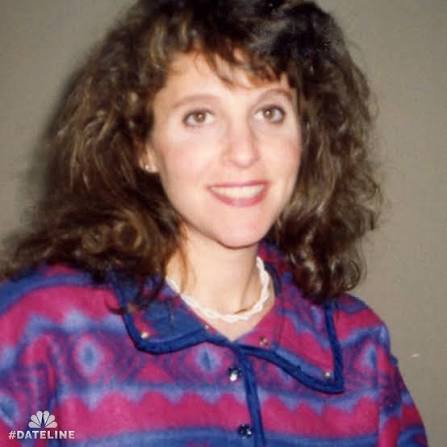
For almost 35 years, Dana Beatty knew what the man who entered her Cincinnati home in 1
989 had done to her. What she did not know was his name.
Beatty, who was known as Dana Sandbo at the time of the attack, survived more than five hours of captivity and sexual violence inside her own home on August 1, 1989. Her attacker covered himself from head to toe, wore a mask, threatened her with a knife and prevented her from seeing his face.
Police recovered something he could not conceal: his DNA.
The evidence remained preserved as forensic science developed through the following decades. In 2024, the FBI and Cincinnati Police Department obtained DNA from a discarded coffee cup used by Cincinnati-area physician Frederick Louis Tanzer.
It matched the biological evidence left by Beatty’s attacker.
The discovery gave Beatty an answer she had waited decades to receive. Tanzer later admitted responsibility, but a statute of limitations prevented prosecutors from charging him with the 1989 sexual assaults. His attempt to deny what happened created a different route to prosecution.
In January 2026, Tanzer was sentenced to 15 years in federal prison for lying to investigators about the crime.
- “Unmasking the Monster”: Dateline NBC Reports on Dana Beatty Case October 2 2026
- Who Is Frederick Louis Tanzer & Where Is He Now? 2026 Update & Profile
Contents
- Who Is Dana Beatty?
- Dana Was Living in Cincinnati in 1989
- The Attacker Put a Knife to Dana’s Throat
- Dana Beatty Was Sexually Assaulted for Hours
- Police Had DNA but No Name
- Dana’s Attacker Disappeared Without Being Identified
- The Case Remained Unsolved for Almost 35 Years
- Investigators Return to Dana’s Case
- A Discarded Coffee Cup Provides the Answer
- Dana Learned Her Attacker Was Frederick Tanzer
- Prosecutors Could Not Charge Tanzer With Raping Dana
- Tanzer Initially Lied About What Happened
- Tanzer Is Arrested 35 Years After the Attack
- Tanzer Admits What He Did to Dana
- Dana’s Case Ends With an Unusual Sentencing
- Dana Chose to Put Her Own Name on the Case
- What Happened to Dana Beatty?
- A Case That Outlived the Law That Could Have Prosecuted It
- Dana Beatty Waited Nearly 35 Years for Her Attacker to Have a Name
- More “Unmasking the Monster”
- More Feature Articles
Who Is Dana Beatty?
Dana Beatty is the woman formerly known as Dana Sandbo, the name she used when she was attacked in Cincinnati in 1989.
Much of Beatty’s personal background has remained outside the public record. Court documents and federal authorities have disclosed extensive information about the crime committed against her, but have not published a comprehensive account of her childhood, family, education or career.
That distinction is important in telling her story. The public record identifies Beatty because she made the decision to allow authorities to use her name, not because federal prosecutors chose to disclose the identity of a sexual assault survivor without her consent.
The U.S. Attorney’s Office for the Southern District of Ohio stated that it does not typically identify victims in cases of this nature. Beatty asked to be identified publicly.
Her decision meant that when the case reached its conclusion decades later, the survivor had a name as well as the man investigators had identified as her attacker.
Dana Was Living in Cincinnati in 1989
On August 1, 1989, Beatty was living in Cincinnati and was known as Dana Sandbo.
Her home became the scene of an attack that would remain under investigation across parts of five decades.
A man broke into the residence. His appearance indicated that concealing his identity was part of his preparation.
He wore a mask and was dressed from head to toe in black Lycra or spandex.
He also carried a knife.
Beatty was inside the place where she lived when the masked man took control of her at knifepoint.
The Attacker Put a Knife to Dana’s Throat
According to federal court records, the intruder held the knife against Beatty’s throat.
He forced her toward her bedroom.
Once there, he took further measures to prevent her from identifying him or escaping.
The attacker used surgical tape to blindfold Beatty. He bound her hands and feet to her bed frame, leaving her restrained while he controlled the room.
Beatty could not see the face of the man holding her captive.
The ordeal would continue for approximately five and a half hours.
Court records later established that Tanzer was the masked man who entered the home.
Dana Beatty Was Sexually Assaulted for Hours
While Beatty was restrained, her attacker subjected her to repeated sexual violence.
Federal prosecutors said she was raped vaginally, anally and orally during the five-and-a-half-hour ordeal.
The U.S. Attorney’s Office described the assaults as involving extreme violence.
For Beatty, survival meant enduring hours with a man whose identity had been hidden from her. She could provide police with information about what had happened, but the attacker’s mask prevented the type of facial identification that could have given investigators an immediate suspect.
His precautions did not eliminate the physical evidence.
The attacker left semen at the crime scene.
That evidence would survive far longer than the secret of his identity.
Police Had DNA but No Name
In 1989, forensic DNA profiling was a developing field.
Investigators collected biological evidence from Beatty’s attack, preserving material that could be connected to the offender.
What they could not do was type a name into a computer and retrieve the person whose DNA matched it.
The national infrastructure that would make DNA evidence central to countless criminal investigations was still developing. Modern database searches and later genetic investigative techniques were not available to the detectives handling Beatty’s case.
The biological evidence could establish a connection if investigators found the right person.
First, however, they needed to find him.
They did not.
Dana’s Attacker Disappeared Without Being Identified
The masked man escaped after the attack.
No arrest followed.
Beatty was left knowing that the person who had restrained and sexually assaulted her remained unidentified.
Years passed.
The case moved further into the past while forensic technology moved forward.
DNA databases expanded. Laboratory methods improved. Genetic evidence that once had limited investigative value became capable of identifying suspects in cases that had been dormant for decades.
Beatty’s case still had the evidence collected in 1989.
What investigators needed was a DNA profile belonging to the man who had left it.
The Case Remained Unsolved for Almost 35 Years
The scale of the wait is central to Beatty’s story.
The attack happened in 1989.
The 1990s passed without her attacker being identified.
So did the 2000s.
Then the 2010s.
By the time investigators reached their breakthrough, almost 35 years had elapsed since the masked man entered Beatty’s home.
The passage of time had another consequence that would become critical once investigators identified him.
The legal deadline for prosecuting the crimes themselves was disappearing while the case remained unsolved.
By approximately 1995, the statute of limitations applicable to the 1989 offenses had expired.
Beatty did not yet know who attacked her.
By the time she did, prosecutors would no longer have the power to charge him with those crimes.
Investigators Return to Dana’s Case
The case was not forgotten.
The Cincinnati Police Department and FBI continued the investigation, eventually focusing their attention on Frederick Louis Tanzer.
Tanzer was a physician living in Sycamore Township in the Cincinnati area.
Investigators needed his DNA.
Instead of relying on Tanzer to provide a sample, law enforcement obtained an item he had used and discarded.
It was an ordinary coffee cup.
Tanzer had left biological material on it when he drank from it.
That material provided investigators with what they needed to make a comparison against evidence preserved since Dana’s attack.
A Discarded Coffee Cup Provides the Answer
In 2024, investigators developed DNA from Tanzer’s coffee cup and compared it with the semen recovered after Beatty was attacked in 1989.
It matched.
For almost 35 years, the DNA from Beatty’s attacker had represented an unidentified man.
It now pointed to Frederick Louis Tanzer.
The coffee cup did not replace the evidence collected in 1989. It supplied the comparison sample investigators had lacked.
Modern testing connected the two.
Local reporting described the result as a positive match between Tanzer’s coffee-cup DNA and biological evidence preserved from the attack.
Beatty finally had the answer to one of the central questions that had followed her since 1989.
Authorities knew who the masked man was.
Dana Learned Her Attacker Was Frederick Tanzer
The identification changed the nature of the investigation.
Tanzer was no longer one unknown man among millions of possible suspects. Investigators had DNA evidence connecting him to the crime scene.
The FBI and Cincinnati police could confront him.
Tanzer’s circumstances by this point stood in contrast with the image preserved in the 1989 case file.
The masked intruder had disappeared after attacking Beatty.
The man investigators identified decades later was a Cincinnati-area doctor in his 60s.
Federal prosecutors later said evidence pointed toward Tanzer being a serial rapist. That statement represented the government’s characterization of the broader evidence, rather than a series of serial-rape convictions against him.
For Beatty’s case, the DNA answered the identity question.
It could not undo another consequence of the 35-year delay.
Prosecutors Could Not Charge Tanzer With Raping Dana
Identifying an offender does not always mean prosecutors retain the legal authority to charge that person.
The statute of limitations covering the crimes committed against Beatty had expired around 1995.
That deadline had passed almost three decades before Tanzer was identified.
The result created a severe limitation for prosecutors.
They possessed DNA connecting Tanzer to evidence left by the attacker.
Investigators could confront him.
The man would later admit what he had done.
Yet prosecutors could not file rape charges based on the 1989 attack because the period permitted by the law in effect had expired.
The scientific problem had been solved too late to solve the legal one.
Tanzer Initially Lied About What Happened
When federal and local investigators questioned Tanzer, he did not begin by admitting that he had attacked Beatty.
According to prosecutors, Tanzer made a series of materially false statements.
One concerned the central issue in the investigation.
Tanzer denied seeing or interacting with Beatty on August 1, 1989.
The preserved DNA evidence contradicted that account.
Those statements became significant because the lies were new conduct. Unlike the 1989 offenses, they had occurred during a current federal investigation and could still be prosecuted.
Tanzer’s attempt to distance himself from Dana created the legal mechanism that would send him to prison.
Tanzer Is Arrested 35 Years After the Attack
Authorities arrested Frederick Louis Tanzer in December 2024.
He remained in custody after the arrest.
For Beatty, the arrest came more than three decades after the night she had been tied to her bed.
The criminal charges, however, were not rape charges.
Federal prosecutors charged Tanzer with making false statements to investigators.
The difference could appear technical from outside the courtroom, but it determined what punishment a judge could impose.
The case concerned Tanzer’s lies under federal law while the events those lies were designed to conceal provided the underlying context.
Tanzer Admits What He Did to Dana
The case produced something Beatty had never received in 1989: an admission from the man responsible.
Tanzer eventually acknowledged that he had attacked her.
In September 2025, he pleaded guilty to three counts of making false statements.
The plea meant there would be no trial requiring a jury to determine whether Tanzer had been the masked man.
His DNA had connected him to the biological evidence.
He then admitted responsibility for the underlying attack.
Public reporting following the case confirmed that Tanzer admitted tying up and repeatedly raping Beatty in 1989.
After decades of uncertainty about the attacker’s identity, that question was settled.
Dana’s Case Ends With an Unusual Sentencing
On January 28, 2026, Tanzer appeared before U.S. District Judge Michael J. Newman.
He was 67 years old.
The judge sentenced him to 180 months in federal prison — 15 years.
It was the statutory maximum available for the three false-statement offenses.
The sentence did not represent punishment following rape convictions. Tanzer was not convicted of the 1989 sexual offenses because their statute of limitations had expired.
He was being punished for lying to federal investigators about his involvement.
The distinction produced an unusual conclusion to Beatty’s case: the man responsible had been identified through DNA and had admitted the attack, but the convictions sending him to prison involved statements he made 35 years later.
Dana Chose to Put Her Own Name on the Case
Beatty made a significant decision as the prosecution became public.
She chose not to remain identified only as an unnamed victim.
The Department of Justice noted this choice when announcing Tanzer’s sentence. Federal prosecutors explained that their office would normally withhold the identity of a crime victim in such a case.
Dana requested that her name be used.
That placed her publicly at the center of the case.
For decades, the man responsible had been the anonymous figure: a masked attacker without a name.
Once DNA removed his anonymity, Beatty chose to remove hers as well.
The case became the story of what Frederick Louis Tanzer did to Dana Beatty, rather than a public account referring only to an unidentified woman.
What Happened to Dana Beatty?
The public record provides extensive information about what Beatty endured in 1989 and the investigation that followed. It provides much less information about the private life she built during the decades between the attack and Tanzer’s identification.
There is no basis in the available material to fill those years with assumptions about her relationships, career or emotional recovery.
What is documented is substantial.
Dana survived the attack.
She lived through almost 35 years without knowing the identity of the masked man who had held a knife to her throat and restrained her inside her home.
She saw forensic evidence collected in 1989 survive long enough for new investigative methods to connect it to Tanzer in 2024.
She saw him arrested.
She saw him admit responsibility.
And she chose to have her name attached publicly to the case.
A Case That Outlived the Law That Could Have Prosecuted It
Beatty’s experience also exposes one of the problems created when forensic science advances faster than old criminal cases can be resolved.
The evidence needed to identify her attacker existed from the beginning.
The technology and investigative lead needed to put a name to it did not.
By the time those elements came together, the statute of limitations had expired.
No later DNA breakthrough could restore a prosecution deadline that had passed decades before.
That is why the final court record does not contain a conviction stating that Frederick Tanzer raped Dana Beatty in 1989.
Instead, Tanzer admitted that conduct while pleading guilty to offenses arising from his attempts to conceal it.
His false statements gave federal prosecutors jurisdiction over conduct that occurred within a prosecutable period.
The court then imposed every year of imprisonment those convictions permitted.
Dana Beatty Waited Nearly 35 Years for Her Attacker to Have a Name
The timeline of Dana Beatty’s case spans an extraordinary period.
She was attacked on August 1, 1989.
The limitation period for prosecuting the underlying crimes expired around 1995.
Investigators obtained the DNA breakthrough in 2024.
Tanzer was arrested that December.
He pleaded guilty in September 2025.
On January 28, 2026, he received the statutory maximum sentence of 15 years in federal prison.
What began with a masked man taking steps to conceal every visible part of himself ended because of biological evidence he could not conceal.
For decades, Dana Beatty knew him only as the man who had entered her home.
A discarded coffee cup changed that.
It gave investigators the comparison they needed to connect Frederick Louis Tanzer to evidence that had waited since 1989.
More than three decades after Dana survived the attack, the man behind the mask had a name, had admitted what he had done and was behind bars.
More “Unmasking the Monster”
- “Unmasking the Monster”: Dateline NBC Reports on Dana Beatty Case October 2 2026
- Who Is Dana Beatty & What Happened to Her? 2026 Update & Profile
- Who Is Frederick Louis Tanzer & Where Is He Now? 2026 Update & Profile
More Feature Articles
- “The Home Alone”: 20/20 Reports on Allison Feldman Homicide September 25 2026
- “Unmasking the Monster”: Dateline NBC Reports on Dana Beatty Case October 2 2026
- 48 Hours Pre-Empted October 3 2026 for UFC & College Football
- 60 Minutes Reports on “Who Needs Humans?”, “The Thom Tillis Tightrope” & “Saint Francis in the Cloud” on October 4 2026