


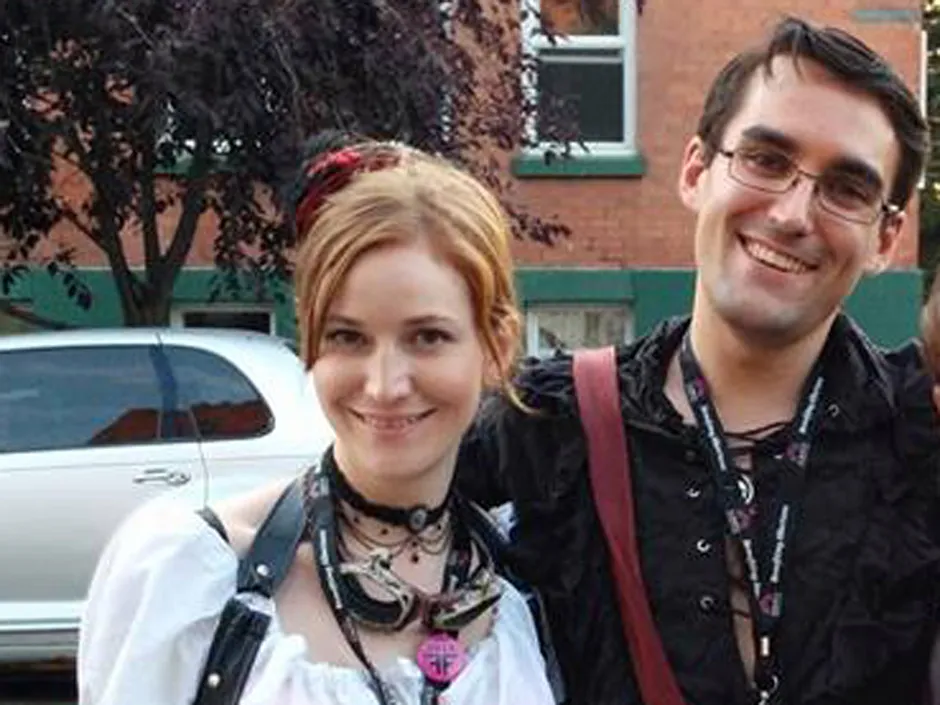
Joshua Burgess is the Calgary man who murdered his estranged wife, actress and comedian Shannon Madill Burgess, inside their home in November 2014. He strangled the 25-year-old with his hands and a belt, concealed her body for months and joined her family’s public appeals while pretending not to know what had happened.
Burgess pleaded guilty to second-degree murder in December 2017 and received a life sentence with no chance of parole for at least ten years. The latest confirmed public information shows that he remains incarcerated after the Parole Board of Canada denied his application for day parole in September 2025. No reliable public report has identified a later release or successful parole application as of July 2026.
- “The Night of the Audition”: Dateline NBC Examines Shannon Madill Burgess Homicide August 1 2026
- Who Was Shannon Madill Burgess and What Happened to Her? 2026 Update & Profile
Contents
- Joshua Burgess Was Shannon Madill’s Husband
- His Marriage Was Coming to an End
- He Killed Shannon After an Argument
- The Killing Involved Sustained Violence
- Joshua Hid Shannon’s Body in a Storage Container
- He Said He Did Not Want Shannon to Leave
- He Pretended Shannon Was Missing
- Shannon’s Family Trusted Him
- His Conduct Began to Attract Suspicion
- Police Focused on the Home and Electronic Evidence
- Joshua Confessed When Police Arrived
- His Suicide Attempt Did Not End the Investigation
- He Was Charged With Second-Degree Murder
- Joshua Initially Denied Legal Responsibility
- He Pleaded Guilty When His Trial Was Due to Begin
- Joshua Apologised to Shannon’s Family
- He Received a Life Sentence
- Shannon’s Family Opposed His Release
- Joshua Sought Day Parole in 2025
- The Parole Board Denied His Application
- Where Is Joshua Burgess Now?
- His Life Sentence Remains in Force
- The Case Changed How Joshua Was Viewed
- Joshua’s Stated Motive Did Not Explain His Choices
- His Future Depends on Parole Decisions
- Joshua Burgess Remains Accountable for Shannon’s Murder
- More “The Night of the Audition”
- More Feature Articles
Joshua Burgess Was Shannon Madill’s Husband
Joshua Burgess was 29 years old when Shannon disappeared in November 2014. The couple lived in a house on Spiller Road S.E. in Calgary’s Ramsay neighbourhood and had been married for several months.
To those around them, Joshua appeared to support Shannon’s pursuit of an acting career. Shannon attended auditions, appeared in short films and hoped to secure larger roles. Her sister Erin once described Joshua as supportive of those ambitions.
Behind that image, the marriage had begun to break down. By late 2014, Shannon and Joshua were separated in practice, although they continued living in the same house.
Both were seeing other people. Shannon had a relationship with Ian Wallace, while Joshua was involved with another woman. Reports about the case stated that Shannon wanted to change or end the couple’s open arrangement, which became a source of conflict.
His Marriage Was Coming to an End
Shannon was preparing to leave Calgary and move to Edmonton. She had received a job offer and was planning the next stage of her life outside the marriage.
Joshua faced the end of the relationship at a time when Shannon was seeking greater independence. Court proceedings established that both spouses were dating other people and that their marriage was ending.
The couple had argued about Joshua’s relationship with another woman. Shannon wanted changes to the arrangement, but Joshua continued seeing his other partner. These tensions formed part of the background examined by investigators after Shannon disappeared.
The breakdown of the marriage did not excuse or explain the level of violence that followed. It established the setting in which Shannon was preparing to leave and Joshua was losing control over the future of the relationship.
He Killed Shannon After an Argument
Shannon returned to the couple’s home after attending an important acting audition. During the early hours of November 27, 2014, she was watching television when Joshua arrived.
The two became intimate on a couch. Joshua later told police that an argument followed after confusion about whether the encounter represented reconciliation or the end of the relationship.
According to the account later presented in court, Shannon told Joshua that she regretted marrying him and expressed disgust toward him. Joshua put his hand over her mouth, claiming that he wanted her to stop speaking.
Shannon bit his hand while resisting. Joshua climbed on top of her and strangled her with his hands before using the belt from his pants to continue the attack. He later admitted that he killed her because he wanted her to “stop talking.”
The Killing Involved Sustained Violence
The murder was not the result of a single accidental movement. Joshua first used his hands to restrict Shannon’s breathing and then introduced a belt into the assault.
Strangulation requires sustained force. Joshua had opportunities to stop before Shannon died, but he continued until the attack became fatal.
His later description focused on Shannon’s words and his desire to silence her. That account placed responsibility on an argument rather than on his own decision to use deadly force.
The agreed facts established that Joshua was responsible for Shannon’s death. His actions after the murder also showed that he understood the seriousness of what he had done and took steps to prevent its discovery.
Joshua Hid Shannon’s Body in a Storage Container
After killing Shannon, Joshua placed her body inside a large plastic storage container. He kept the container outside the house on a patio or porch during the Calgary winter.
The remains stayed at the property while Shannon’s family searched for her. Joshua continued living in the house and knew that her body was close by.
When the ground thawed, he removed Shannon’s remains from the container and buried her in the yard. He covered the grave with soil, branches and other material.
Reports have referred to the burial location as the front yard, backyard or lawn. The consistent fact is that Joshua buried Shannon on the property where they had lived together.
He Said He Did Not Want Shannon to Leave
Joshua later gave police a disturbing explanation for choosing the home as Shannon’s burial place. He said he did not want her to leave.
The statement carried particular weight because Shannon had been preparing to leave the marriage and move to Edmonton. She had plans for employment, acting and a life away from Joshua.
By killing Shannon and keeping her remains at the property, Joshua imposed the control that he was losing over her life. Her planned departure became impossible, and her family was denied the ability to find or bury her.
His conduct after the killing also extended his control over information. He alone knew that Shannon was dead, how she had died and where her body was located.
He Pretended Shannon Was Missing
Shannon failed to attend a planned family gathering and was reported missing on December 1, 2014. Her car and belongings remained at home, but Joshua claimed that he did not consider her absence unusual.
He told police that Shannon sometimes travelled for acting auditions. This explanation helped present her disappearance as a possible voluntary departure rather than a crime.
Joshua stood beside Shannon’s parents and siblings during a public appeal for information. He allowed them to speak about their fears and ask the public for help while knowing that Shannon was dead.
The deception lasted for about seven months. During that period, Shannon’s family considered the possibility that she had been abducted, injured or held somewhere against her will.
Shannon’s Family Trusted Him
Joshua’s position as Shannon’s husband gave him access to her relatives during the search. They treated him as another grieving family member and stood beside him.
The family’s later victim impact statements described the murder and concealment as a profound betrayal. Joshua had not only killed Shannon but had watched her relatives search for her.
He accepted their support while hiding information that could have ended their uncertainty. Each day he remained silent allowed the family to continue hoping that Shannon might return.
That conduct became one of the most damaging parts of the case for Shannon’s relatives. The deception transformed their previous relationship with Joshua into evidence of how he had manipulated their trust.
His Conduct Began to Attract Suspicion
Investigators examined Joshua’s account of the night Shannon disappeared. His memory was unclear, and parts of his explanation failed to match the evidence.
Shannon’s phone became an important element of the investigation. Joshua claimed that he found it in a pair of her pants several days after she vanished, despite repeated calls and messages from her family.
Phone records showed that the device had moved outside the residence after Shannon’s last confirmed sighting. Detectives had to determine who had carried it into the alley behind the home.
Joshua’s behaviour during the search also raised questions. Reports stated that he maintained an online dating profile and continued seeing another woman while Shannon remained missing.
Police Focused on the Home and Electronic Evidence
Calgary investigators reconstructed Shannon’s final movements through interviews, phone records and information about her relationships.
The fact that her car and personal belongings remained at the residence suggested that she had not made a planned departure. Her failure to contact relatives also conflicted with Joshua’s suggestion that she had left for acting work.
Detectives examined the couple’s vehicles, mobile phones and the movement of Shannon’s device. These inquiries increased the pressure on Joshua’s version of events.
By July 2015, police had obtained a warrant that allowed them to search property and electronic evidence linked to the disappearance.
Joshua Confessed When Police Arrived
Police went to the Spiller Road home to execute the search warrant in July 2015. Joshua refused to answer the door and remained inside.
Detective Christina Witt contacted him by telephone. During the conversation, Joshua became distressed and admitted that he had killed Shannon.
According to Witt’s later account, Joshua made the admission within the first minutes of their conversation. The confession changed the investigation from a suspected homicide into a case with an admitted perpetrator.
Joshua then attempted to cut his own throat. When he emerged from the house, he was covered in blood and required hospital treatment.
His Suicide Attempt Did Not End the Investigation
Joshua survived the injuries and was taken into custody after leaving the hospital. He then gave police a detailed account of Shannon’s murder.
He described the argument, the strangulation, the storage container and the later burial. His account directed investigators to Shannon’s remains.
Police recovered her body from the property. The discovery ended seven months of uncertainty for her family but confirmed the outcome they had feared.
Joshua’s attempt to harm himself delayed his immediate arrest but did not prevent the case from moving forward. He remained in custody after being charged.
He Was Charged With Second-Degree Murder
Joshua was charged with second-degree murder in July 2015. The charge alleged that he intentionally caused Shannon’s death but did not require prosecutors to prove that the killing had been planned in advance.
Under Canadian law, both first-degree and second-degree murder carry mandatory life sentences. The difference affects matters including the period before an offender can seek parole.
Joshua entered a not-guilty plea, which placed the case on course for trial. Prosecutors prepared to present evidence about the killing, concealment and his conduct during the missing person investigation.
He remained incarcerated while the case moved through the court system.
Joshua Initially Denied Legal Responsibility
Although Joshua had confessed to police, he did not enter a guilty plea when the murder charge was first brought before the court.
A not-guilty plea meant prosecutors still had to prepare witnesses, forensic evidence and the statements needed to prove the case at trial.
The expected proceedings would have forced Shannon’s family to hear detailed evidence about her final moments and the treatment of her body.
That trial did not take place. Joshua changed his plea when the case reached court in December 2017.
He Pleaded Guilty When His Trial Was Due to Begin
Joshua pleaded guilty to second-degree murder on December 4, 2017, the day his trial was scheduled to start.
An agreed statement of facts was read in court. It outlined the collapse of the marriage, the argument, the strangulation and Joshua’s efforts to conceal Shannon’s body.
The guilty plea removed the need for a contested trial. Joshua accepted criminal responsibility, and the case moved to sentencing.
The plea also spared Shannon’s family from weeks of testimony and graphic evidence. It did not lessen the facts they heard during the sentencing hearing.
Joshua Apologised to Shannon’s Family
Joshua addressed the court before receiving his sentence. He apologised for failing to honour the marriage vows he had made to Shannon.
He acknowledged that her family had stood by him during the search without knowing that he was responsible for her disappearance.
Joshua also expressed regret that he had not disclosed the truth sooner. His statement recognised the months of uncertainty caused by his silence.
The apology did not change the evidence that he had concealed Shannon’s body, misled police and allowed her family to treat him as another victim of the disappearance.
He Received a Life Sentence
The court sentenced Joshua to life in prison for second-degree murder. He was ordered to serve at least ten years before becoming eligible to apply for parole.
The sentence was imposed in December 2017, but his time in custody following his July 2015 arrest counted toward his parole eligibility.
A Canadian life sentence does not end after the minimum parole period. The ten-year term represented the earliest point at which Joshua could ask the Parole Board of Canada for release.
Even if parole is granted at some future point, the life sentence remains in effect. He would remain under supervision for life and could be returned to prison for breaching parole conditions.
Shannon’s Family Opposed His Release
Shannon’s relatives have made clear that they do not consider the minimum parole period an adequate response to the murder.
Her brother Tyler Madill said he intended to attend Joshua’s parole hearings and oppose release. He argued that no term of imprisonment could account for the loss of his sister.
At Joshua’s 2025 hearing, Tyler expressed concern about the danger of allowing him to return to the community. He told the board that nothing would convince him that releasing Joshua would be safe.
The family’s concerns addressed both the murder and Joshua’s conduct during the following months. His ability to conceal the crime and deceive those closest to Shannon remained central to their opposition.
Joshua Sought Day Parole in 2025
By 2025, Joshua had become eligible to seek a form of conditional release. He applied for day parole rather than unrestricted release from his life sentence.
Day parole would have allowed him to spend approved periods outside prison while living under supervision, often through a halfway house or community-based residential facility.
During his incarceration, Joshua obtained a welding qualification. He proposed moving to Edmonton and seeking employment as a welder if the board approved his release plan.
His application showed that he had begun preparing for possible reintegration. The Parole Board still had to determine whether his release would create an unacceptable risk.
The Parole Board Denied His Application
In September 2025, the Parole Board of Canada denied Joshua’s request for day parole.
The board concluded that granting release was premature. The decision meant that his vocational training and proposed employment plan were not enough to support community access at that stage.
A denial of day parole does not add time to a life sentence because the sentence already lasts for life. It means the offender remains incarcerated until a later review results in a different decision.
Joshua may be able to apply again under the timelines and procedures governing federal offenders. A future application would require another assessment of his risk, conduct, insight and release plan.
Where Is Joshua Burgess Now?
As of the latest confirmed public reporting, Joshua Burgess remains incarcerated in Canada while serving his life sentence for Shannon Madill’s murder.
His request for day parole was rejected in September 2025, and no reliable public report available by July 2026 shows that he has since received day parole, full parole or another form of release.
The specific correctional institution holding Joshua has not been confirmed in the available public reporting. Canadian authorities do not always disclose an offender’s current prison because of privacy, security and operational concerns.
It is therefore accurate to state that Joshua remains in federal custody, but it would not be responsible to name a prison without an official or reliable source confirming his placement.
His Life Sentence Remains in Force
Joshua’s sentence did not expire when he completed the ten-year parole ineligibility period. That period only established when he could begin asking for conditional release.
The life sentence remains active whether he stays in prison or receives parole in the future. Any release would come with conditions and lifelong supervision.
The Parole Board can deny, suspend or revoke conditional release when it considers public safety at risk. A person serving a life sentence can be returned to custody after a breach.
Joshua’s failed 2025 application means that, at the last confirmed review, the board was not prepared to allow him to begin serving part of his sentence in the community.
The Case Changed How Joshua Was Viewed
Before Shannon’s disappearance, Joshua was known to her family as her husband and a supporter of her acting career.
During the search, he appeared as a man waiting for his missing wife to return. He stood with her relatives and shared the public role of a concerned spouse.
His confession replaced that image with the facts of the murder. He had killed Shannon, hidden her body and used the uncertainty surrounding her disappearance to avoid detection.
The contrast between his public conduct and private knowledge remains one of the defining elements of the case.
Joshua’s Stated Motive Did Not Explain His Choices
Joshua said he killed Shannon because he wanted her to stop speaking during an argument. That statement described his immediate reaction but did not provide a rational motive for murder.
His conduct involved a series of separate decisions. He strangled Shannon with his hands, used a belt, placed her body in a container, stored it through the winter and buried it after the ground thawed.
He then chose not to confess while her family searched. He joined their appeals and continued his own relationships while withholding the truth.
Those choices extended the crime beyond the fatal attack. They demonstrated concealment, deception and an effort to preserve his own freedom.
His Future Depends on Parole Decisions
Joshua can seek future consideration from the Parole Board of Canada, subject to the rules that apply to his sentence and previous denial.
Any new application would examine his behaviour in custody, understanding of the offence, management of risk factors, proposed residence, employment plans and community supervision.
The board would also consider public safety and submissions from Shannon’s relatives. Completing training or reaching a parole date does not create an automatic right to release.
Until a board grants parole or another authorised release, Joshua will remain incarcerated under his life sentence.
Joshua Burgess Remains Accountable for Shannon’s Murder
Joshua’s guilty plea established his legal responsibility for killing Shannon. His life sentence and failed parole application continue to define his current position.
He is not serving a fixed sentence with a scheduled release date. He is serving a life term and must persuade the Parole Board that any future release can be managed without creating an undue risk.
The latest available outcome is clear: his 2025 request to enter the community through day parole was denied as premature.
Shannon’s family continues to carry the consequences of the murder and the deception that followed it. Joshua remains in custody, while any change in his status will depend on future decisions by Canada’s correctional and parole authorities.
More “The Night of the Audition”
- “The Night of the Audition”: Dateline NBC Examines Shannon Madill Burgess Homicide August 1 2026
- Who Was Shannon Madill Burgess and What Happened to Her? 2026 Update & Profile
- Who Is Joshua Burgess and Where Is He Now? 2026 Update & Profile
More Feature Articles
- “Where Monsters Hide”: 20/20 Revisits the Kelly Cochran Murder Pact That Led to Two Killings July 31 2026
- “The Day Dee Disappeared”: Dateline NBC Reports on Dee Warner Homicide July 31 2026
- “The Night of the Audition”: Dateline NBC Examines Shannon Madill Burgess Homicide August 1 2026
- “The Footprint”: 48 Hours Investigates the Jeanie Childs Homicide on August 1 2026