


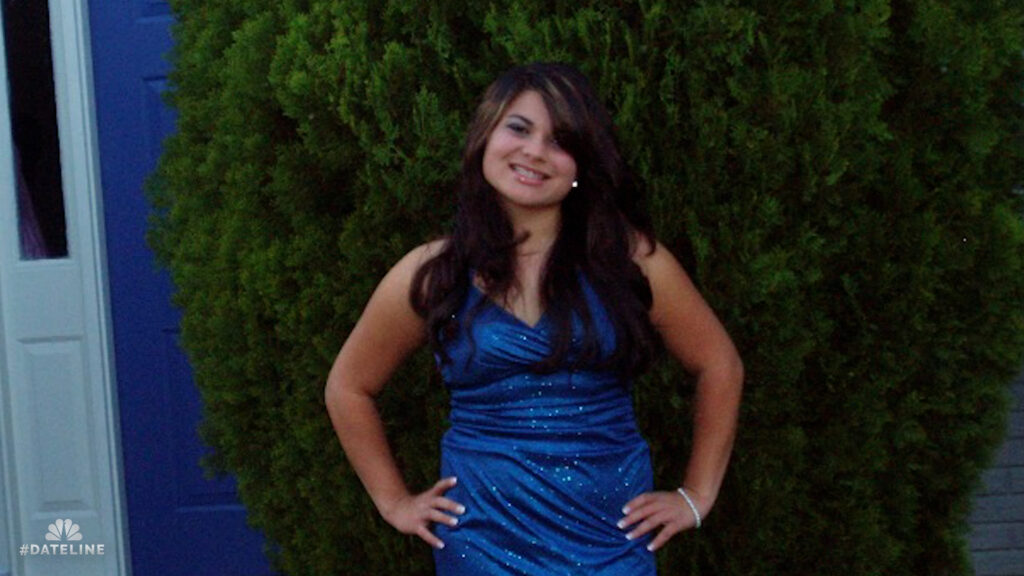
Bethany Anne Decker was a 21-year-old college student, mother, and waitress whose disappearance in January 2011 became one of Virginia’s most widely followed missing person cases. Friends and family described her as intelligent, caring, energetic, and deeply devoted to her young son. Her disappearance shocked relatives and investigators because it was completely out of character for her to suddenly cut off contact with family, abandon her responsibilities, and leave behind her belongings.
Born Bethany Anne Littlejohn on May 13, 1989, in Fredericksburg, Virginia, Bethany attended George Mason University, where she studied global and economic change. Alongside her studies, she worked full-time at a restaurant to support herself and her family. Those close to her said she worked hard to balance school, parenting, and employment while trying to create a stable future for her son.
Bethany married Army National Guardsman Emile Decker in 2009. The couple welcomed a son together later that year. Because Emile was frequently deployed overseas, including long assignments in Afghanistan, Bethany often relied on her parents and grandparents for support while raising their child and attending college.
- “Bethany Vanished”: Dateline Reports on Bethany Decker Homicide May 9 2026
- Who Is Ronald Roldan & Where Is He Now? 2026 Update & Profile
Contents
Bethany’s Personal Struggles Before Her Disappearance
As the pressures of military deployments and family responsibilities mounted, Bethany’s marriage began to experience difficulties. During this period, she met Ronald Roldan while working at a restaurant in Centreville, Virginia. The relationship eventually became romantic, and Bethany separated from Emile and moved into an apartment in Ashburn, Virginia.
According to Bethany’s family, the relationship with Roldan became controlling and abusive. Relatives later said Roldan monitored her constantly and demanded updates about where she was and who she spent time with. Family members became concerned about her safety and reportedly began discussing ways to help her leave the relationship.
Despite the turmoil in her personal life, Bethany continued trying to move forward. She remained enrolled at George Mason University, maintained her job, and cared for her son. At the time of her disappearance, she was also pregnant with her second child. Investigators later believed Ronald Roldan was the father of the unborn baby.
Friends and relatives later reflected on how much stress Bethany had been under during the final months of her life. Her grandmother recalled that Bethany seemed anxious and emotionally overwhelmed during their final visit together in January 2011.
The Last Time Bethany Was Seen
In January 2011, Emile Decker returned from Afghanistan on military leave. During his time home, he and Bethany attempted to repair their marriage and even traveled together to Hawaii. Family members later said the trip was partly intended to create distance between Bethany and Ronald Roldan.
After returning from Hawaii, Bethany spent time with relatives in Maryland on January 28, 2011. The next day, she returned to her apartment in Ashburn. Ronald Roldan later claimed he saw her there that afternoon.
Bethany also contacted her employer to confirm her upcoming work schedule. That phone call became the final confirmed communication she ever made.
After January 29, Bethany disappeared completely. She stopped attending classes at George Mason University, never returned to work, and never accessed her bank accounts or cell phone again. Friends and relatives initially believed she might simply be overwhelmed or taking time away because messages continued appearing from her Facebook account.
Those messages delayed alarm for several weeks. Eventually, family members became suspicious because the tone and wording did not sound like Bethany. By February 2011, her grandparents visited her apartment complex and discovered her car sitting untouched in the parking lot with a flat tire and covered in dust.
The Investigation Into Bethany’s Disappearance
When investigators searched Bethany’s apartment, they found many of her personal belongings still inside, including her purse, keys, phones, and computer. Her car trunk was packed with possessions, suggesting she may have been preparing to move. There was no evidence she had voluntarily abandoned her life.
Authorities focused on the two men closest to her: Emile Decker and Ronald Roldan. Emile cooperated with investigators, returned from Afghanistan, and underwent questioning and a polygraph examination. Detectives eventually determined he had a solid alibi and cleared him as a suspect.
Attention increasingly turned toward Ronald Roldan. Investigators uncovered inconsistencies in his statements and learned more about his criminal history and violent behavior. Detectives also became suspicious that the Facebook messages sent after Bethany disappeared were part of an attempt to cover up the crime.
Despite extensive searches and years of investigation, Bethany’s body was never found. The lack of physical evidence prevented prosecutors from immediately filing murder charges, and the case remained unsolved for years.
The Breakthrough That Solved the Case
The investigation gained new momentum after Ronald Roldan became involved in another violent relationship. In 2014, his girlfriend Vickey Willoughby survived a brutal assault and shooting in North Carolina. During the investigation into that attack, Willoughby told authorities that Roldan had made disturbing comments implying he had made another girlfriend disappear.
Virginia investigators revisited Bethany’s case and continued analyzing digital evidence. They later determined that devices connected to Roldan’s internet activity matched the same IP addresses used to send Facebook messages from Bethany’s account after she vanished.
In 2020, authorities charged Roldan with abduction in connection with Bethany’s disappearance. Two years later, he pleaded guilty to second-degree murder.
As part of the plea agreement, Ronald Roldan admitted he caused Bethany’s death during an argument inside their apartment in January 2011. He claimed he pushed her during the confrontation, causing her to strike her head on a windowsill. Investigators later questioned the truthfulness of parts of his story and believed there had been a deliberate attempt to cover up the killing.
Roldan said he placed Bethany’s body into a Christmas tree disposal bag and dumped it into the apartment complex trash compactor. Authorities believe her remains ended up in a landfill and are no longer recoverable.
The Outcome of the Case
In February 2023, Ronald Roldan was sentenced to 40 years in prison, with all but 12 and a half years suspended under the terms of the plea agreement. Prosecutors stated that the agreement finally gave Bethany’s family some answers after more than a decade of uncertainty.
For Bethany’s family, the case left permanent emotional scars. For years, they lived with hope that she might still be alive while also fearing the worst. The discovery that messages had been sent from her social media accounts after her death made the deception even more painful.
Bethany’s story became nationally known because of the heartbreaking circumstances surrounding her disappearance. She was a young mother, a college student working toward a future, and a woman whose family believed she was trapped in an abusive relationship she was trying to escape.
Even after the guilty plea, major questions remain unanswered. Bethany’s body has never been found, and investigators still doubt Ronald Roldan’s full account of how she died. Her family continues to remember her not only as the victim of a tragic crime, but as a loving mother and daughter whose life was cut short while she was trying to rebuild her future.