


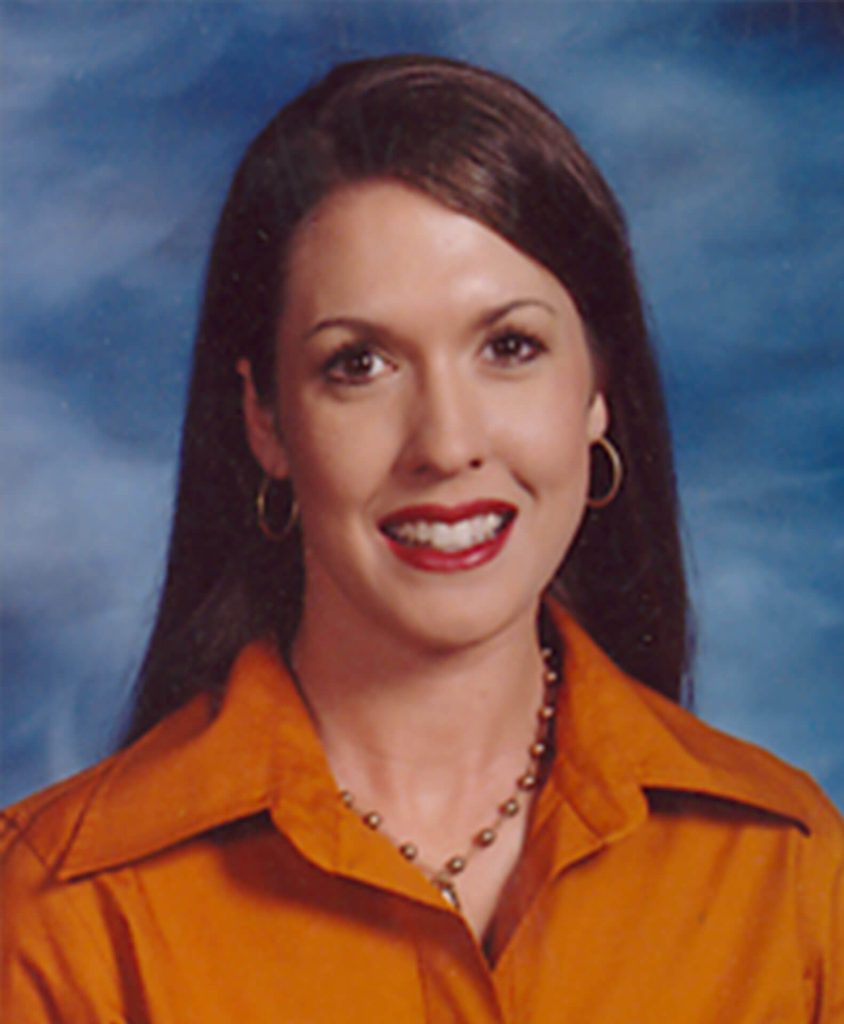
Tara Faye Grinstead was a respected Georgia high school teacher, former beauty queen and aspiring school administrator whose disappearance in October 2005 became one of the state’s most enduring criminal investigations. She was 30 years old when she vanished from her home in Ocilla, leaving behind a career in education, a close circle of friends and a family that would spend more than a decade searching for answers.
For nearly 12 years, investigators struggled to determine what happened to Grinstead after she was last seen on October 22, 2005. Her car remained outside her house, her mobile telephone was found inside and a latex glove containing unidentified male DNA was discovered in her yard. Despite extensive searches and national media coverage, no arrests were made until February 2017.
The investigation led to two former students from the high school where Grinstead taught, Ryan Duke and Bo Dukes. Both men were implicated in the disposal of her body at a pecan orchard, but their conflicting accounts of the killing complicated the prosecution. Ryan Duke was acquitted of murder in 2022 but convicted of concealing her death, while Bo Dukes received a 25-year sentence in 2019 for offences connected to the cover-up.
Grinstead’s life and the investigation into her disappearance are revisited in Dateline NBC’s “The Orchard,” airing Friday, October 30, 2026, at 9 p.m. ET/PT, with correspondent Andrea Canning examining the evidence, the arrests and the trials that followed.
- “The Orchard”: Dateline Reports on The Disappearance of Tara Grinstead October 30 2026
- Who is Ryan Duke & Where Is He Now? 2026 Update & Profile
- Who is Bo Dukes & Where Is He Now? 2026 Update & Profile
Contents
- Tara Grinstead’s Childhood and Family Background
- Her Career as a History Teacher in Ocilla
- Tara Grinstead’s Beauty Pageant Success
- Her Personal Life Before the Disappearance
- Tara Grinstead’s Last Known Day: October 22, 2005
- The Discovery That Tara Grinstead Was Missing
- The Latex Glove Found Outside Her Home
- The Search for Tara Grinstead
- How Up and Vanished Brought Renewed Attention to Her Case
- The 2017 Arrests of Ryan Duke and Bo Dukes
- What Happened to Tara Grinstead’s Body?
- Ryan Duke’s Confession and His Later Claims
- The Trials and What the Courts Decided
- The 2025 Court Decision That Dismissed Further Charges
- What Remains Unresolved About Tara Grinstead’s Death?
- Tara Grinstead’s Legacy and the Community That Remembered Her
- More “The Orchard”
- More Feature Articles
Tara Grinstead’s Childhood and Family Background
Tara Faye Grinstead was born on November 14, 1974, in Hawkinsville, Georgia, to Bill and Faye Grinstead. She grew up in central Georgia alongside her sister, Anita, in a family that valued education and community involvement.
Grinstead developed an interest in teaching and beauty pageants during her youth. Both pursuits became important parts of her adult life, providing opportunities for education, professional development and involvement in her community.
She attended Middle Georgia College in Cochran before continuing her education at Valdosta State University. In 2003, she earned a master’s degree in education, building on her ambition to establish a long-term career in teaching.
Grinstead maintained close relationships with friends from her childhood. Among them was Maria Woods Harber, who grew up with her in Hawkinsville and would become one of the most prominent voices advocating for answers after her disappearance.
Harber described her friend as a woman with a warm personality, a broad smile and a talent for encouraging people during difficult periods.
Those relationships became central to the search for Grinstead when she vanished in October 2005.
Her Career as a History Teacher in Ocilla
In 1998, Grinstead began teaching history at Irwin County High School in Ocilla, a small town in south Georgia. She became a familiar figure among students, parents and colleagues through her classroom work and extracurricular activities.
Grinstead also served as a cheerleading coach, combining her interest in education with mentoring students outside the classroom. Her responsibilities extended beyond academic instruction to supporting students through competitions, school events and personal challenges.
School officials described her as a teacher with a strong connection to her students. Irwin County High School principal Bobby Conner spoke about the impact of her disappearance on the community and the affection students had for her.
Grinstead hoped to advance into school administration. At the time of her disappearance, she was attending night classes to earn a specialist degree that would support her ambition of becoming a principal.
Her career represented more than a job. She had spent seven years working at the same high school, building relationships with students and families throughout Irwin County.
The fact that she failed to arrive at work on Monday, October 24, 2005, became the first indication that something serious had happened.
Tara Grinstead’s Beauty Pageant Success
Grinstead participated in beauty pageants to earn scholarship money that could help finance her education. Her success in competitions contributed to her ability to pursue college and postgraduate studies.
In 1999, she won the Miss Tifton title, earning a place in the Miss Georgia pageant. The achievement was a significant moment in her pageant career and provided an opportunity to compete at the state level.
Her friend Maria Woods Harber recalled that reaching the Miss Georgia competition had been one of Grinstead’s principal goals.
After she stopped competing, Grinstead remained involved in pageants as a mentor and coach. She helped young contestants prepare for interviews, select clothing and develop the confidence required for competitions.
Former student Dana Wilder recalled that Grinstead took her under her wing and taught her about interviews, hair, makeup and wardrobe.
On the final day she was known to have been active in the community, Grinstead helped contestants prepare for a local beauty pageant. The supplies she used that day were among the belongings investigators found inside her home after she disappeared.
Her Personal Life Before the Disappearance
Grinstead lived alone in a house near downtown Ocilla, close to the community where she had established her teaching career.
Her personal life attracted considerable attention after she vanished, with investigators examining relationships and friendships to determine whether someone she knew might have been involved.
One of her most significant relationships was with Marcus Harper, a former Ocilla police officer who later joined the Army Rangers.
The couple had dated for approximately six years, although their relationship had ended before October 2005. Harper’s military service involved periods away from Georgia, and friends said Grinstead had found the breakup difficult.
Investigators examined the relationship as part of their effort to reconstruct her circumstances before the disappearance.
Harper was not charged in connection with Grinstead’s death. The investigation into her personal relationships did not establish who had entered her home or what had happened during her final hours.
The attention given to her dating life became one of the features of the case, particularly as rumours circulated through Ocilla during the years without an arrest.
Tara Grinstead’s Last Known Day: October 22, 2005
Saturday, October 22, 2005, was the last day Grinstead was known to have been seen before her disappearance.
She spent part of the day helping young women prepare for the Sweet Potato Pageant, a local competition. Her involvement reflected her continued commitment to mentoring contestants after her own pageant career had ended.
Grinstead also attended a barbecue that evening. Investigators reconstructed her activities through interviews with people who had seen or spoken with her during the weekend.
She returned to her home in Ocilla, although the precise circumstances of her final hours have never been established through an eyewitness account.
No confirmed account identifies the person who entered her residence, the exact time of an attack or the sequence of events that led to her death.
These gaps became important during the subsequent murder investigation and criminal trials.
The final known activities of October 22 appeared consistent with Grinstead’s ordinary routine. Nothing from the publicly established timeline indicated that she intended to leave her home, abandon her career or disappear.
The Discovery That Tara Grinstead Was Missing
On Monday, October 24, 2005, Grinstead failed to arrive at Irwin County High School.
Her absence concerned colleagues because she was known for her commitment to teaching. Attempts to contact her were unsuccessful, prompting friends and school officials to seek assistance.
Police entered her home and discovered circumstances that raised concerns about her safety.
Her car was parked outside the house, and her mobile telephone remained inside. Investigators also found beauty supplies from the weekend’s pageant preparations, an unmade bed and a broken bedside lamp.
Her purse and keys were missing.
Officers found no clear signs of forced entry. The scene did not establish whether Grinstead had encountered someone she knew or whether an intruder had entered the property.
Ocilla police requested assistance from the Georgia Bureau of Investigation, recognising that the circumstances required a substantial investigation.
The disappearance of a well-known teacher generated concern throughout the community. Friends, relatives and volunteers began searching for information that might explain what had happened.
The Latex Glove Found Outside Her Home
One of the most important discoveries came from the front yard of Grinstead’s house, where investigators recovered a latex glove.
The glove was found near the front entrance, and detectives could not establish why it had been left on the property.
Forensic testing identified Grinstead’s DNA and DNA from an unidentified male contributor.
The discovery gave investigators a potential means of identifying someone connected to her disappearance.
The Georgia Bureau of Investigation compared the unknown male profile with samples obtained from numerous men who knew Grinstead or had connections to her life.
None of those early comparisons produced a match.
The DNA profile was also entered into state and national databases, but investigators were unable to identify the contributor during the first decade of the investigation.
Former GBI official Gary Rothwell described the glove as an important piece of evidence that could help solve the case.
It would take until 2017 for investigators to connect the male DNA profile to Ryan Duke, one of the men arrested in connection with Grinstead’s death.
The Search for Tara Grinstead
The investigation expanded across Georgia as authorities pursued tips, interviewed witnesses and examined possible explanations for Grinstead’s disappearance.
Her photograph appeared on billboards seeking information, and the case attracted coverage from local and national news organisations.
Searches were conducted in areas around Ocilla, while investigators reviewed accounts from people who claimed to have information about her whereabouts.
In 2008, CBS’s 48 Hours examined the case, introducing Grinstead’s disappearance to a wider audience and highlighting the latex glove recovered from her property.
The investigation also encountered false leads, including a series of online videos posted in 2009 by a man calling himself the “Catch Me Killer.”
The videos claimed responsibility for numerous deaths, including Grinstead’s disappearance. Authorities identified the creator as Andrew Haley and determined that the claims were part of a hoax.
Despite years of investigative work, police did not identify a suspect whose involvement could support criminal charges.
In December 2010, Grinstead was declared dead in absentia. The declaration recognised her legal status but did not establish how she died or who was responsible.
How Up and Vanished Brought Renewed Attention to Her Case
In 2016, filmmaker Payne Lindsey launched Up and Vanished, an investigative podcast examining Grinstead’s disappearance.
The series reviewed the evidence, interviewed people connected to the case and explored the unanswered questions that had surrounded the investigation for more than a decade.
Its popularity introduced Grinstead’s story to a new generation of listeners and renewed public discussion about the case.
The podcast also encouraged people with connections to Ocilla to revisit information they had heard about the disappearance.
During the period in which the podcast attracted national attention, investigators received disclosures that led to the identification of two men connected to the disposal of Grinstead’s body.
The direct investigative breakthrough came through information provided to law enforcement, including statements involving Brooke Sheridan, the girlfriend of Bo Dukes.
Lindsey’s work played a role in sustaining public attention, while the arrests were supported by witness disclosures, interviews and forensic evidence gathered by investigators.
The 2017 Arrests of Ryan Duke and Bo Dukes
In February 2017, investigators received information connecting Ryan Duke and Bo Dukes, two former students of Irwin County High School, to Grinstead’s disappearance.
The men had attended the school where Grinstead taught. Despite their similar surnames, they are not related.
Brooke Sheridan told authorities that her boyfriend, Bo Dukes, had disclosed his involvement in helping dispose of Grinstead’s body.
During a February 21, 2017 interview with the Georgia Bureau of Investigation, Bo Dukes said Ryan Duke had approached him in October 2005 and admitted killing Grinstead.
According to that account, Ryan Duke had taken Grinstead’s body to a pecan orchard owned by the Dukes family in Ben Hill County.
Bo Dukes said the two men burned her body at the orchard over a period of two days.
On February 23, 2017, investigators announced Ryan Duke’s arrest on murder charges. Bo Dukes was arrested in March on charges connected to concealing the death and obstructing the investigation.
The arrests came more than 11 years after Grinstead vanished.
For her family and friends, the announcement provided the first public identification of men accused of involvement in her death.
What Happened to Tara Grinstead’s Body?
Investigators searched the pecan orchard in Ben Hill County after receiving statements that Grinstead’s body had been taken there and burned.
The property became a central location in the investigation because both men were implicated in the disposal of the body.
Search teams recovered burned bone fragments from the orchard, but the condition of the material made forensic identification difficult.
DNA testing did not conclusively establish that the recovered fragments belonged to Grinstead.
The inability to identify the remains prevented investigators from conducting a conventional autopsy and establishing a medical cause of death.
The absence of an identified body became a significant issue during Ryan Duke’s murder trial, particularly when the defence challenged the prosecution’s account of how Grinstead had died.
Evidence concerning the orchard supported criminal proceedings involving concealment and destruction of evidence.
However, the recovery of burned fragments did not establish which man had committed the killing.
Grinstead’s remains have not been conclusively identified through the forensic evidence described in the court proceedings.
Ryan Duke’s Confession and His Later Claims
After his arrest in 2017, Ryan Duke gave investigators a confession implicating himself in Grinstead’s death.
According to prosecutors, Duke said he had entered her home to steal from her purse while under the influence of drugs.
He claimed that Grinstead confronted him and that he attacked her. The original allegations included a claim that he strangled her.
The confession became central to the prosecution’s case, along with the DNA evidence connecting Duke to the latex glove found outside her home.
However, Duke later recanted the confession and maintained that he had admitted to a killing he did not commit.
During his 2022 trial, he testified that Bo Dukes had confessed to killing Grinstead and had asked for help disposing of her body.
Duke said he helped move her body to the pecan orchard, where Bo Dukes burned it.
His attorneys argued that the earlier confession was unreliable and suggested that the latex glove bearing Duke’s DNA could have been planted outside Grinstead’s home.
The conflicting accounts left jurors to determine whether the prosecution had established Duke’s responsibility for the murder beyond a reasonable doubt.
The Trials and What the Courts Decided
Bo Dukes was the first of the two men to stand trial. In March 2019, he faced charges arising from his involvement in concealing Grinstead’s death and misleading investigators.
A jury convicted him of the offences presented in the Wilcox County proceedings, and he received a 25-year prison sentence.
The conviction established his criminal responsibility for conduct connected to the concealment and obstruction of the investigation, not for committing Grinstead’s murder.
Ryan Duke’s murder trial began in May 2022, more than 16 years after Grinstead disappeared.
Prosecutors presented his 2017 confession and the DNA evidence recovered from the latex glove. The defence argued that Duke had falsely confessed and that Bo Dukes was responsible for the killing.
On May 20, 2022, the jury acquitted Ryan Duke of malice murder, felony murder, aggravated assault and burglary.
He was convicted of concealing Grinstead’s death and sentenced to 10 years in prison on May 23.
The verdict meant that the prosecution had not proved Duke committed the murder beyond a reasonable doubt. It did not establish that Bo Dukes was the killer.
The result left both men convicted of offences connected to the concealment of Grinstead’s death, but neither convicted of her murder.
The 2025 Court Decision That Dismissed Further Charges
Following Ryan Duke’s acquittal, prosecutors pursued additional charges against both men connected to the alleged disposal of Grinstead’s body in Ben Hill County.
Those charges involved allegations of concealing a death, hindering the apprehension of a criminal and tampering with evidence.
Attorneys for Duke and Dukes challenged the prosecutions, arguing that the charges had been filed after the applicable legal deadlines had expired.
On February 27, 2025, the Georgia Court of Appeals ruled that the statute of limitations barred the additional charges.
The decision resulted in the dismissal of those proceedings.
It did not overturn Ryan Duke’s 2022 conviction for concealing a death or Bo Dukes’ 2019 convictions and sentence.
The appellate ruling was based on the timing of the charges rather than a determination of which man had killed Grinstead.
The case therefore remained without a murder conviction despite the arrests, confessions, forensic evidence and years of criminal proceedings.
What Remains Unresolved About Tara Grinstead’s Death?
The criminal proceedings established that Ryan Duke participated in concealing Grinstead’s death and that Bo Dukes committed offences connected to concealing the death and obstructing investigators.
They did not establish, through a murder conviction, which man killed her.
Ryan Duke initially confessed to the killing but recanted and testified that Bo Dukes was responsible. Bo Dukes had given investigators an account implicating Ryan Duke.
The competing statements formed a major part of the legal dispute.
The absence of conclusively identified remains and a medical determination of the cause of death created further difficulties for prosecutors.
Investigators also lacked a confirmed eyewitness account of the attack inside Grinstead’s home.
Although the evidence and court proceedings established important facts about the disposal of her body, the precise circumstances of her death remain disputed.
No person has been convicted of murdering Tara Grinstead.
Tara Grinstead’s Legacy and the Community That Remembered Her
Tara Grinstead was 30 years old when she disappeared, less than three weeks before her 31st birthday.
She had spent seven years teaching history at Irwin County High School and was pursuing additional qualifications with the goal of becoming a school administrator.
Her involvement in beauty pageants had helped finance her education, and she continued mentoring young contestants after her own competitive career ended.
Friends and former students remembered her for her encouragement, her commitment to teaching and the time she devoted to helping others.
Her disappearance changed the community of Ocilla, where her photograph remained visible on billboards and her case continued attracting attention for more than a decade.
The investigation also became a prominent example of the difficulties associated with prosecuting a homicide without an identified body, a confirmed cause of death or an uncontested account of the killing.
The arrests in 2017 and subsequent convictions provided answers about the concealment of her death, but the absence of a murder conviction left a central question unresolved.
Grinstead’s life and the events surrounding her disappearance are revisited in Dateline NBC’s “The Orchard,” airing October 30, 2026, with interviews examining the investigation, the trials and the people who continued seeking answers.
More than 20 years after she vanished, Tara Grinstead is remembered as a teacher, mentor, daughter, sister and friend whose life was cut short before she could fulfil her ambitions in education.
More “The Orchard”
- “The Orchard”: Dateline Reports on The Disappearance of Tara Grinstead October 30 2026
- Who Was Tara Grinstead & What Happened to Her? 2026 Update & Profile
- Who is Ryan Duke & Where Is He Now? 2026 Update & Profile
- Who is Bo Dukes & Where Is He Now? 2026 Update & Profile