
Who Was Daniel Anderl & What Happened to Him? 2026 Update & Profile
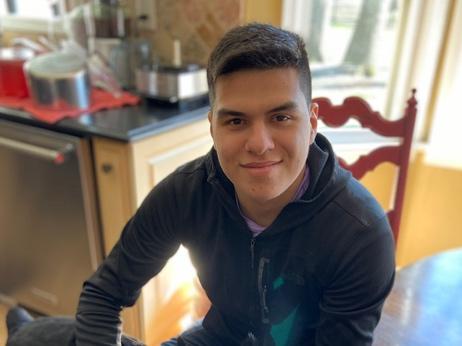
Daniel Anderl was 20 years old, a college student with plans for law school and the only child of U.S. District Court Judge Esther Salas and attorney Mark Anderl.
On July 19, 2020, he was spending a Sunday at his family home in North Brunswick, New Jersey, after a weekend celebrating his birthday with friends. Within hours, Daniel would be shot and killed at his own front door by a gunman investigators believe had come to murder his mother.
His death became the central tragedy in a case later examined by Dateline, but Daniel’s story extends beyond the circumstances of his murder. He was a student, athlete, friend and son whose family described him as the centre of their lives. After his death, his name became attached to state and federal laws designed to protect judges and their families from the type of targeted violence that reached his home.
- “The Grudge”: Dateline NBC Revisits the Murder of Daniel Anderl and the Gunman Who Targeted Judge Esther Salas September 4 2026
- Who Was Marc Angelucci & What Happened to Him? 2026 Update & Profile
- Who Was Roy Den Hollander & What Happened to Him? 2026 Update & Profile
Contents
- Daniel Was the Only Child of Esther Salas and Mark Anderl
- He Grew Up Playing Baseball
- Daniel Attended The Catholic University of America
- His Friends Remembered Him as Loyal and Dependable
- The COVID-19 Pandemic Brought Daniel Home
- His Friends Came to Celebrate His 20th Birthday
- Daniel Spent His Final Afternoon With His Mother
- A Man Posing as a Delivery Driver Was Waiting Outside
- Daniel Was Shot at the Front Door
- His Parents Believe Daniel Protected His Father
- Investigators Soon Learned Daniel Was Not the Intended Target
- Roy Den Hollander Was Found Dead One Day Later
- The Investigation Linked Hollander to Another Murder
- Hollander Had Developed a Grudge Against Judge Salas
- Hollander’s Death Meant There Would Be No Trial
- Daniel’s Parents Were Left to Grieve Their Only Child
- Daniel’s Death Sparked a Campaign to Protect Judges
- New Jersey Passed Daniel’s Law
- Federal Legislation Was Also Named After Daniel
- Catholic University Has Continued to Honour Daniel
- A Possible Sainthood Cause Was Explored in 2025
- Daniel Anderl Was More Than the Victim in a Famous Case
- More “The Grudge”
- More Feature Articles
Daniel Was the Only Child of Esther Salas and Mark Anderl
Daniel Mark Anderl was born into a family that had waited years for him.
His parents, Esther Salas and Mark Anderl, had endured four miscarriages before Daniel was born. Salas would later describe him as their miracle child. The three formed a close family, and friends who knew them said Daniel had a strong relationship with both of his parents.
Salas was an attorney who became a federal judge, while Mark worked as a lawyer and had previously served as a prosecutor. Daniel grew up surrounded by the legal profession, but his relationship with his parents was not defined only by their careers.
He spoke about them with pride and regarded them as two of the most important people in his life. Friends later recalled that Daniel did not hesitate to talk about his mother’s accomplishments as a judge or his father’s work as an attorney.
That closeness would become central to the final moments of his life.
He Grew Up Playing Baseball
Sports formed an important part of Daniel’s childhood.
He played baseball for years and was coached for about a decade by Joe Augustine, who later described him as the type of player who arrived prepared and contributed to the team.
Daniel shared his father’s interest in sport, and baseball gave the two another connection as he grew up.
He had enough ability to consider continuing with athletics after high school, but his priorities began to shift as he moved toward college.
Daniel decided to concentrate on his education instead.
His growing interest in law suggested he might eventually follow the path already taken by both of his parents.
Daniel Attended The Catholic University of America
In 2018, Daniel left New Jersey for The Catholic University of America in Washington, D.C.
He became part of the university community and was preparing to begin his junior year in 2020. He earned recognition on the Dean’s List and was enrolled for classes due to begin only weeks after his death.
Daniel had started thinking about a future in law. Those who knew him said he had made a conscious decision to focus on his studies and was considering law school.
His choice was not surprising.
He had grown up watching both parents build legal careers, and he took pride in the work they had done. His mother had risen from the public defender’s office to become a U.S. magistrate judge and then a federal district judge. His father had also built his career in law.
Daniel appeared to be preparing to join them.
His Friends Remembered Him as Loyal and Dependable
Daniel’s college friends described someone they could call when they needed help.
The stories they told after his death were often ordinary moments that revealed how much they relied on him. Friends recalled calling Daniel late at night because a bug had frightened them in their room. Daniel got on an electric skateboard, arrived in his pyjamas and dealt with the problem.
Other memories involved conversations, advice and time spent together.
Friends said Daniel listened when people were struggling and was one of the first people they contacted when they needed another person’s opinion.
He also had a reputation for enjoying the moment rather than becoming consumed by stress.
One friend recalled having a video of Daniel dancing in the rain. Others remembered his willingness to tell people he loved them.
Those memories became much more significant after July 2020.
The COVID-19 Pandemic Brought Daniel Home
Daniel was studying in Washington when the COVID-19 pandemic changed university life across the United States.
Students left for spring break in March 2020 and were later told they would not be returning to campus.
Daniel went back to New Jersey.
The sudden move separated him from friends he had been seeing every day. For a college student accustomed to university life, the isolation was difficult.
By July, his 20th birthday was approaching and he wanted to see his friends.
His parents were concerned about the pandemic, but they agreed that a small group could visit if precautions were taken.
The weekend would become one of Daniel’s final memories with them.
His Friends Came to Celebrate His 20th Birthday
Daniel’s friends arrived at the Anderl home on Friday, July 17, 2020.
They spent much of the weekend outside. His parents helped provide meals, and his friends had a chance to spend time with the family as well as Daniel.
For the group, it offered a temporary return to the friendships and social life that had been disrupted months earlier.
Daniel appeared to treasure the weekend.
His friends later recalled him describing it as the best weekend of his life.
On Sunday, July 19, they said goodbye and left the family home.
One friend remembered Daniel saying that he loved him as they parted.
Within hours, Daniel was dead.
Daniel Spent His Final Afternoon With His Mother
After his friends left, Daniel remained at home with his parents.
He and his mother were cleaning the basement and talking. Salas later described the weekend as a special period for the family, one that had left Daniel in high spirits.
Their conversation continued as they worked.
Salas later recalled Daniel telling her that he wanted them to keep talking because he loved talking with her.
Then the doorbell rang.
The interruption seemed routine.
No one inside the home knew that the person waiting outside had spent years developing grievances against people he blamed for problems in his life.
One of those people was Judge Esther Salas.
A Man Posing as a Delivery Driver Was Waiting Outside
Daniel’s father looked toward the front of the home and saw a man who appeared to be making a delivery.
The man was carrying a package and appeared to be associated with FedEx.
The fact that someone had arrived on a Sunday was unusual, but not enough to cause immediate alarm. During the pandemic, with Salas conducting federal court work under disrupted conditions, deliveries were common.
Daniel heard the doorbell.
He ran upstairs.
The man outside was Roy Den Hollander, a 72-year-old New York attorney.
Investigators would later conclude that Hollander had travelled to the house because he wanted to attack Judge Salas.
Daniel had no dispute with Hollander.
He had never met him in court.
He was simply the person who opened the door.
Daniel Was Shot at the Front Door
According to investigators, Hollander asked for Judge Salas after Daniel answered.
The encounter turned violent within seconds.
Hollander opened fire in the entrance of the home.
Daniel was struck in the chest.
Mark Anderl, who was nearby, was also shot. He suffered three gunshot wounds, including a severe abdominal injury.
Salas remained downstairs during the first moments of the attack.
She heard gunfire and screaming.
By the time she reached the entrance, the gunman had fled.
She found her husband critically wounded and her son dying.
Daniel could not be saved.
He was 20 years old.
His Parents Believe Daniel Protected His Father
The circumstances of Daniel’s shooting became one of the most painful parts of his family’s account.
Mark later remembered Daniel raising his arms during the confrontation before being struck.
Salas said her son took the first bullet while trying to protect his father.
Daniel’s godfather, David Oakley, described Daniel’s actions as heroic.
The evidence also suggested that Daniel and Mark prevented Hollander from getting farther into the house.
Investigators came to believe that Hollander had not travelled there to kill Daniel.
His intended target was Judge Salas.
By confronting Daniel and Mark at the doorway, Hollander never reached her.
It is impossible to know what would have happened had Daniel not answered the door, but his presence changed the course of the attack.
Investigators Soon Learned Daniel Was Not the Intended Target
In the hours after the shooting, investigators had to determine why anyone would attack the family.
Because Salas was a federal judge, the FBI immediately became involved.
Authorities examined the possibility that the shooting was connected to one of her cases or to Mark’s legal work.
They also considered whether the attack could be connected to terrorism or a broader threat against the judiciary.
The answer came the following day.
A man was found dead on a rural road in the Catskill Mountains of New York.
He was Roy Den Hollander.
Roy Den Hollander Was Found Dead One Day Later
Hollander’s body was discovered on July 20, 2020.
Police found a semiautomatic handgun nearby and determined that he had died from a self-inflicted gunshot wound.
His death could have appeared unrelated to the shooting in New Jersey.
Then investigators searched his vehicle.
Inside they found a FedEx envelope addressed to Judge Esther Salas.
The discovery tied Hollander to the type of disguise used during the attack at the Anderl home.
Investigators also learned that the handgun associated with him was the same calibre as the weapon used during the shooting.
The evidence pointed toward Hollander as the gunman who killed Daniel and wounded Mark.
His possessions contained another lead.
The Investigation Linked Hollander to Another Murder
Investigators found an address in California among Hollander’s belongings.
When they checked it, they discovered that another attorney had been murdered there only eight days before Daniel’s death.
The victim was Marc Angelucci, a 52-year-old lawyer who lived in the San Bernardino Mountains.
His murder carried striking similarities to the attack in New Jersey.
A man posing as a delivery driver had arrived at Angelucci’s home with a package.
The visitor insisted that Angelucci come to the door.
When he did, he was shot.
A .380-calibre handgun had been used.
Investigators now had two killings on opposite sides of the United States involving a similar disguise, a similar method and victims connected to the same area of law.
Hollander Had Developed a Grudge Against Judge Salas
Hollander was an attorney who had spent years filing lawsuits concerning what he considered discrimination against men.
One of his cases challenged the requirement that men register for the Selective Service System while women did not.
The case came before Judge Salas.
Hollander became hostile toward her.
His writings attacked Salas in racist and misogynistic terms, and investigators concluded that he blamed her for what he believed was slow progress in his case.
The dispute was no longer a normal disagreement between a lawyer and a judge.
His writings showed that Salas had become a personal target of his resentment.
Daniel died because that resentment followed Salas home.
Hollander’s Death Meant There Would Be No Trial
Roy Den Hollander was never arrested for Daniel’s murder.
He was never charged.
He never faced a jury.
His suicide the day after the attack meant there could be no murder trial and no opportunity for prosecutors to question him in court.
Investigators instead reconstructed what happened through physical evidence, surveillance footage, ballistic evidence, Hollander’s travel history and the large collection of writings he left behind.
Authorities concluded that he was responsible for the attack at the Salas home and connected him to the murder of Marc Angelucci.
The absence of a trial also left some questions unanswered.
Investigators found information concerning other judges and possible targets among Hollander’s possessions, but he was no longer alive to explain what he had planned.
Daniel’s Parents Were Left to Grieve Their Only Child
For Esther Salas and Mark Anderl, identifying the gunman did not change what had happened.
They had lost the child they had waited years to have.
Mark also faced months of treatment and recovery from his gunshot wounds.
Salas had escaped physical injury, but she was left with the knowledge that investigators believed the killer had come to the house because of her.
The attack turned Daniel’s final conversation with his mother into one of the memories she would later share in public.
Moments before the shooting, he had asked her to keep talking with him.
That detail became part of the way Salas spoke about her son after his death.
Daniel’s Death Sparked a Campaign to Protect Judges
Salas soon focused on another part of the case.
Hollander had been able to find her home.
She argued that the amount of personal information available online made judges and their families vulnerable to anyone who became obsessed with a court ruling.
The shooting demonstrated that family members could become victims even when the grievance concerned the judge.
Daniel had played no part in Hollander’s lawsuit.
He was killed because the man seeking his mother reached the family home.
Salas and Mark began campaigning for stronger privacy protections for judges and their families.
They wanted Daniel’s death to lead to changes that could prevent another attack.
New Jersey Passed Daniel’s Law
In November 2020, New Jersey enacted legislation named in Daniel’s honour.
Daniel’s Law placed restrictions on the disclosure of home addresses and other personal information belonging to judges, prosecutors and law-enforcement officers.
The measure was designed to make it more difficult for people to locate public officials at their private homes.
For Salas, the law was tied to what Hollander had done.
He had transformed a legal grievance into an attack on a judge’s family because he could locate where they lived.
The New Jersey legislation became the first major step in a wider campaign.
Federal Legislation Was Also Named After Daniel
Daniel’s parents continued pressing Congress for national protections.
Their campaign resulted in the Daniel Anderl Judicial Security and Privacy Act, which became federal law in 2022.
The legislation provides privacy protections for federal judges and their immediate families and creates measures intended to limit the disclosure of sensitive personal information such as home addresses.
Daniel’s name therefore became part of federal judicial security policy.
A 20-year-old student who had never sat on a bench or practised law became associated with legislation protecting people working throughout the federal judiciary.
The law could not change what happened to him.
Its purpose was to reduce the chance that another judge’s child would face the same danger.
Catholic University Has Continued to Honour Daniel
Daniel remained part of the Catholic University community after his death.
A memorial Mass was held for him and his parents, and a scholarship fund was created in his memory.
A plaque honouring Daniel was later installed at the entrance to the university’s Columbus School of Law.
The location carried particular meaning because Daniel had been considering a future legal career.
He never had the opportunity to complete his undergraduate degree or attend law school.
The university lists him as a member of the Class of 2021 in memoriam.
A Possible Sainthood Cause Was Explored in 2025
Daniel’s story took another turn five years after his murder.
In October 2025, Catholic University announced that a commission in the Diocese of Metuchen would study the possibility of opening a cause for Daniel’s canonization.
The process followed requests from members of the Catholic community who believed Daniel’s life and actions deserved further examination.
The decision did not mean that Daniel had been declared a saint or that a formal canonization cause had reached an advanced stage.
It represented an early inquiry into whether such a process should proceed.
Those who knew Daniel through his faith have placed particular emphasis on what they believe he did during the shooting: protecting his father when confronted by a gunman.
Daniel Anderl Was More Than the Victim in a Famous Case
The circumstances of Daniel’s death attracted national attention because his mother was a federal judge and because the investigation uncovered another murder across the country.
That can obscure who Daniel was before Roy Den Hollander appeared at his door.
He was a 20-year-old college student.
He was a son his parents had waited years to have.
He was a baseball player, a friend who arrived when people needed him, a student considering law school and someone who had spent his final weekend celebrating with people he loved.
On July 19, 2020, he answered a door in his own home.
The man standing outside had come because of a grievance against Daniel’s mother.
Daniel was shot in the chest and killed before the gunman could reach her.
His life ended at 20, but his name became attached to laws in New Jersey and across the United States intended to protect judges, prosecutors, law-enforcement personnel and their families.
For Esther Salas and Mark Anderl, however, those laws carry a meaning larger than judicial security.
They carry the name of their only son.
More “The Grudge”
- “The Grudge”: Dateline NBC Revisits the Murder of Daniel Anderl and the Gunman Who Targeted Judge Esther Salas September 4 2026
- Who Was Daniel Anderl & What Happened to Him? 2026 Update & Profile
- Who Was Marc Angelucci & What Happened to Him? 2026 Update & Profile
- Who Was Roy Den Hollander & What Happened to Him? 2026 Update & Profile
More Feature Articles
- “The Grudge”: Dateline NBC Revisits the Murder of Daniel Anderl and the Gunman Who Targeted Judge Esther Salas September 4 2026
- “The Hungryland Homicide”: 20/20 Reports on Tricia Todd Homicide September 4 2026
- “The Gaslighting of Hannah Pettey”: 48 Hours Reports September 5 2026
- “Tracker Dakota Black”: 48 Hours Reports on Makayla Meave Homicide September 5 2026






1 Response
[…] Who Was Daniel Anderl & What Happened to Him? 2026 Update & Profile […]