
Who Is Frederick Louis Tanzer & Where Is He Now? 2026 Update & Profile
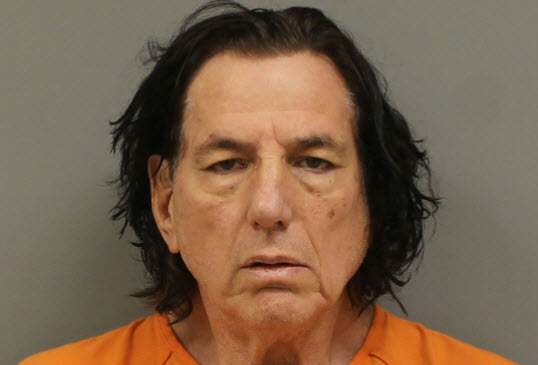
Frederick Louis Tanzer spent decades living as a physician while a violent 1989 rape in Cincinnati remained unsolved.
The case changed in 2024, when investigators obtained DNA from a Starbucks coffee cup Tanzer discarded and compared it with biological evidence preserved from the attack on Dana Beatty, then known as Dana Sandbo. The profiles matched, giving the FBI and Cincinnati Police Department the identity of the man they said had entered Beatty’s home, restrained her at knifepoint and sexually assaulted her over a period of about five and a half hours.
Tanzer was 66 when federal agents arrested him in December 2024. He first denied interacting with Beatty on the day of the attack, statements that became the foundation of a federal prosecution because the statute of limitations prevented authorities from charging him with the 1989 sexual offenses.
He later admitted responsibility for the attack and pleaded guilty to three counts of making false statements to federal agents.
On January 28, 2026, a federal judge sentenced Tanzer to 15 years in prison, the maximum punishment available for the offenses of conviction.
- “Unmasking the Monster”: Dateline NBC Reports on Dana Beatty Case October 2 2026
- Who Is Dana Beatty & What Happened to Her? 2026 Update & Profile
Contents
- Who Is Frederick Louis Tanzer?
- The 1989 Attack That Would Follow Tanzer Decades Later
- Biological Evidence Was Left Behind
- The Investigation Turns Toward Tanzer
- A Coffee Cup Connects Tanzer to the Crime Scene
- The Statute of Limitations Had Expired
- Tanzer Initially Denied Contact With Dana Beatty
- Federal Agents Arrest Tanzer
- Investigators Find Restraints Inside Tanzer’s Home
- Investigators Examine Claims Involving Other Women
- Prosecutors Describe Tanzer as a Serial Rape Suspect
- Tanzer Changes Course and Admits the 1989 Attack
- Why Tanzer Was Not Convicted of Rape
- Tanzer Faces Sentencing in January 2026
- Frederick Tanzer Is Sentenced to 15 Years in Federal Prison
- What Happened to Tanzer’s Medical Career?
- Where Is Frederick Tanzer Now?
- Tanzer’s Case Did Not End With a Rape Trial
- A Crime Hidden for 35 Years Ends With a Prison Sentence
- More “Unmasking the Monster”
- More Feature Articles
Who Is Frederick Louis Tanzer?
Frederick Louis Tanzer was a Cincinnati-area physician who lived in Sycamore Township, Ohio, before his arrest.
He was 66 when federal agents took him into custody in December 2024 and 67 when he was sentenced in January 2026. Public records connected with the criminal case describe him as a doctor and show that he had lived and practiced medicine in more than one state during his adult life.
Federal investigators said Tanzer had connections to Ohio, Kansas and Colorado, an issue that became important when authorities began looking at whether the 1989 attack represented an isolated crime or part of a broader pattern.
The federal case that ultimately sent Tanzer to prison did not arise from his medical practice. It grew from a cold-case sexual assault committed decades before investigators knew his name.
The 1989 Attack That Would Follow Tanzer Decades Later
On August 1, 1989, Dana Beatty returned to her Cincinnati condominium.
According to Tanzer’s eventual plea documents, he broke into her home while wearing a mask and clothing that covered him from head to toe in black Lycra.
He was armed with a knife.
Tanzer held the knife against Beatty’s throat and dragged her into her bedroom. He blindfolded her with surgical tape and tied her hands and feet to the bed frame.
He then subjected her to repeated sexual assaults over approximately five and a half hours.
Tanzer left the residence without being identified.
Biological Evidence Was Left Behind
Although Tanzer had concealed his face and body, he left biological evidence at the crime scene.
Investigators recovered semen belonging to the attacker.
The evidence had enormous potential, but DNA technology and law-enforcement databases in 1989 could not give detectives the immediate identification that modern investigators might expect.
For decades, the evidence represented an unknown offender.
Beatty survived and could describe what the masked man had done, but investigators did not know whose DNA they possessed.
The case remained unsolved for almost 35 years.
The Investigation Turns Toward Tanzer
By 2024, Cincinnati police and the FBI had developed Tanzer as a prime suspect.
Investigators still needed DNA that could be compared directly with the material preserved from 1989.
They obtained it without asking Tanzer for a sample.
According to federal authorities, agents watched Tanzer at a local Bureau of Motor Vehicles office and recovered a Starbucks coffee cup he discarded.
The cup contained his biological material.
A forensic laboratory generated a DNA profile from the cup and compared it with the semen recovered after Beatty’s attack.
It matched.
A Coffee Cup Connects Tanzer to the Crime Scene
The DNA result transformed the case.
Investigators now had scientific evidence connecting Frederick Tanzer with the man who had sexually assaulted Beatty in 1989.
For nearly three and a half decades, the DNA had existed without a name.
The discarded cup supplied the missing comparison.
The FBI and Cincinnati police could now approach Tanzer knowing that the genetic evidence tied him to the crime scene.
What followed would become important because prosecutors faced a major legal barrier involving the original offenses.
The Statute of Limitations Had Expired
By the time Tanzer was identified, prosecutors could no longer charge him with the sexual assaults committed in 1989.
Federal authorities said the applicable statute of limitations expired at about 1995.
That meant modern DNA technology had solved the identity question too late to allow a prosecution for the underlying crimes.
The limitation presented a difficult result.
Authorities could possess DNA connecting Tanzer with the attack and still lack the legal power to file rape charges.
Investigators nevertheless questioned him.
His answers created a new case.
Tanzer Initially Denied Contact With Dana Beatty
When investigators confronted Tanzer, he did not acknowledge that he had been inside Beatty’s home.
Federal prosecutors said he made several materially false statements to an FBI agent and a Cincinnati police detective.
Among those statements was Tanzer’s denial that he had seen or interacted with Beatty on August 1, 1989.
The DNA evidence contradicted that claim.
Because Tanzer made those statements during a current federal investigation, prosecutors could charge him with crimes that had not expired under a statute of limitations.
The investigation shifted from a time-barred rape prosecution to a federal false-statements case.
Federal Agents Arrest Tanzer
Agents arrested Tanzer on December 11, 2024.
They also searched his Sycamore Township home and vehicles.
A federal grand jury later returned a six-count indictment. Tanzer was charged with four counts of making false statements and two counts involving false documents or writings.
Each count carried a possible sentence of up to five years.
Tanzer remained in federal custody after his arrest while the case proceeded.
The charges did not accuse him of rape because prosecutors could not revive the expired limitation period.
They accused him of lying during the investigation into those rapes.
Investigators Find Restraints Inside Tanzer’s Home
The search of Tanzer’s residence raised further concerns for investigators.
According to reporting based on the federal case, authorities found items including cable zip ties, restraints, a gag and a black hat in a dresser drawer inside his home.
The discovery did not by itself establish that those items had been used in another crime.
Federal prosecutors, however, argued that evidence suggested the 1989 assault might not have been an isolated event.
The government described Tanzer as a possible serial sexual predator and sought information from anyone who might have experienced similar conduct.
The FBI publicly asked people with information about Tanzer to come forward.
Investigators Examine Claims Involving Other Women
The federal indictment disclosed allegations involving additional women.
Prosecutors said court documents detailed two additional alleged victims, and investigators sought information connected to Tanzer’s time in Ohio, Kansas and Colorado.
Those allegations require an important distinction.
Tanzer was not convicted of raping those women in the federal case that resulted in his 15-year sentence.
The claims formed part of the government’s broader investigation and its argument that Tanzer presented a danger to the public.
One organization involved in funding advanced DNA testing in the cold case later reported that two women had come forward alleging that Tanzer drugged and raped them repeatedly, including allegations involving conduct far more recent than 1989.
Those accounts remained allegations rather than separate rape convictions.
Prosecutors Describe Tanzer as a Serial Rape Suspect
The government’s position became more direct by sentencing.
U.S. Attorney Dominick S. Gerace II said Tanzer’s DNA established his responsibility for the Beatty attack and stated that evidence pointed toward him being a serial rapist.
That statement represented the prosecution’s assessment of the evidence.
It should not be confused with a judicial finding that Tanzer had been convicted of multiple unrelated rapes.
His federal convictions consisted of false-statement offenses.
The distinction matters because prosecutors used the broader evidence to argue that he posed a serious public-safety risk while seeking the maximum sentence the false-statement charges allowed.
Tanzer Changes Course and Admits the 1989 Attack
The case did not proceed to trial.
On September 5, 2025, Tanzer appeared in federal court and pleaded guilty to three counts of making false statements.
Each count carried a maximum sentence of five years.
His plea documents also contained an admission concerning the underlying crime.
Tanzer admitted that he had broken into Beatty’s home in 1989 and subjected her to the prolonged sexual assault described by prosecutors.
That admission resolved the central factual question that had remained open since the night of the attack.
The person behind the mask was Frederick Tanzer.
Why Tanzer Was Not Convicted of Rape
One of the most unusual aspects of Tanzer’s case is the difference between what he admitted doing and the charges on his federal judgment.
He admitted committing the 1989 attack.
DNA connected him to the crime scene.
Yet his convictions were not for rape.
The reason was the expired statute of limitations.
The legal deadline did not disappear simply because new technology identified the offender.
Prosecutors could therefore use the attack as the context for Tanzer’s lies and for sentencing arguments, but the criminal counts still before the court concerned the false statements he made decades later.
Tanzer Faces Sentencing in January 2026
By sentencing, prosecutors argued that Tanzer deserved the full punishment available.
The government emphasized the nature of the crime he had attempted to conceal, his initial lies to investigators and evidence that authorities believed pointed toward other sexual violence.
Tanzer faced up to five years for each of the three counts to which he had pleaded guilty.
That made 15 years the maximum aggregate term available.
On January 28, 2026, Tanzer appeared before U.S. District Judge Michael J. Newman in Dayton.
The judge imposed the maximum.
Frederick Tanzer Is Sentenced to 15 Years in Federal Prison
Tanzer received a sentence of 180 months in federal prison.
That is 15 years.
He was 67 years old when the sentence was imposed.
The sentence represented the statutory maximum for the three false-statement counts.
Tanzer had already remained in custody since his December 2024 arrest, meaning the period he spent detained before sentencing forms part of the broader time he has been incarcerated.
The Department of Justice described the sentence as punishment for the lies Tanzer told federal investigators about the 1989 attack.
What Happened to Tanzer’s Medical Career?
Public reporting surrounding the federal prosecution identifies Tanzer as a former Cincinnati-area doctor.
The available public reporting reviewed for this profile does not provide a complete professional chronology explaining when he stopped practicing medicine or the status of every professional license he may have held.
What is documented is that investigators examined his history across several states, including Ohio, Kansas and Colorado.
That geographic history became relevant because authorities were seeking information from anyone who might have encountered similar conduct.
By the time of his sentencing in January 2026, Tanzer was no longer living the life he had before his arrest.
He had been in federal custody for more than a year and was beginning a lengthy prison sentence.
Where Is Frederick Tanzer Now?
As of October 2026, Tanzer is serving the 15-year federal prison sentence imposed in January.
The Department of Justice confirms that he had remained in federal custody since his December 2024 arrest and was sentenced to 180 months in federal prison.
Current public sources reviewed for this article do not provide a reliable, confirmed federal prison facility assignment for Tanzer, so it would be inaccurate to identify a specific institution without a verified Bureau of Prisons record.
What can be stated with confidence is that Tanzer remains under federal imprisonment as a result of the three false-statement convictions.
At 67 when sentenced, the term extends well into his 80s if served without a substantial reduction permitted under federal law.
The 15-year sentence is the maximum the judge could impose on the counts to which he pleaded guilty.
Tanzer’s Case Did Not End With a Rape Trial
The legal outcome can appear unusual because there was never a trial at which jurors returned a rape conviction.
That does not mean the underlying attack remained unresolved.
Tanzer’s DNA matched the semen preserved from the 1989 crime scene.
He then admitted that he was the man who entered Beatty’s home and committed the assault.
The absence of rape charges resulted from the statute of limitations, not from prosecutors lacking an identified offender.
The federal case instead punished Tanzer for the lies he told when investigators confronted him about his involvement.
A Crime Hidden for 35 Years Ends With a Prison Sentence
Tanzer’s story spans almost four decades.
In 1989, a masked attacker left Dana Beatty’s Cincinnati home without being identified.
The biological evidence remained.
By about 1995, the statute of limitations governing the original crimes had expired.
In 2024, investigators recovered Tanzer’s discarded coffee cup and obtained the DNA profile that connected him to the crime scene.
He denied contact with Beatty.
Federal prosecutors charged him over those denials.
Tanzer later admitted his role in the attack, pleaded guilty to three false-statement counts and received the maximum sentence available.
As of October 2026, Frederick Louis Tanzer is a federal prisoner serving a 15-year sentence.
The sentence is formally for lying to federal investigators.
The case that led him there began with the crime those lies were designed to hide: the five-and-a-half-hour attack on Dana Beatty in August 1989.
More “Unmasking the Monster”
- “Unmasking the Monster”: Dateline NBC Reports on Dana Beatty Case October 2 2026
- Who Is Dana Beatty & What Happened to Her? 2026 Update & Profile
- Who Is Frederick Louis Tanzer & Where Is He Now? 2026 Update & Profile
More Feature Articles
- “The Home Alone”: 20/20 Reports on Allison Feldman Homicide September 25 2026
- “Unmasking the Monster”: Dateline NBC Reports on Dana Beatty Case October 2 2026
- 48 Hours Pre-Empted October 3 2026 for UFC & College Football
- 60 Minutes Reports on “Who Needs Humans?”, “The Thom Tillis Tightrope” & “Saint Francis in the Cloud” on October 4 2026



2 Responses
[…] Who Is Frederick Louis Tanzer & Where Is He Now? 2026 Update & Profile […]
[…] Who Is Frederick Louis Tanzer & Where Is He Now? 2026 Update & Profile […]