
Who Is Kore Bommeli & Where Is She Now? 2026 Update & Profile
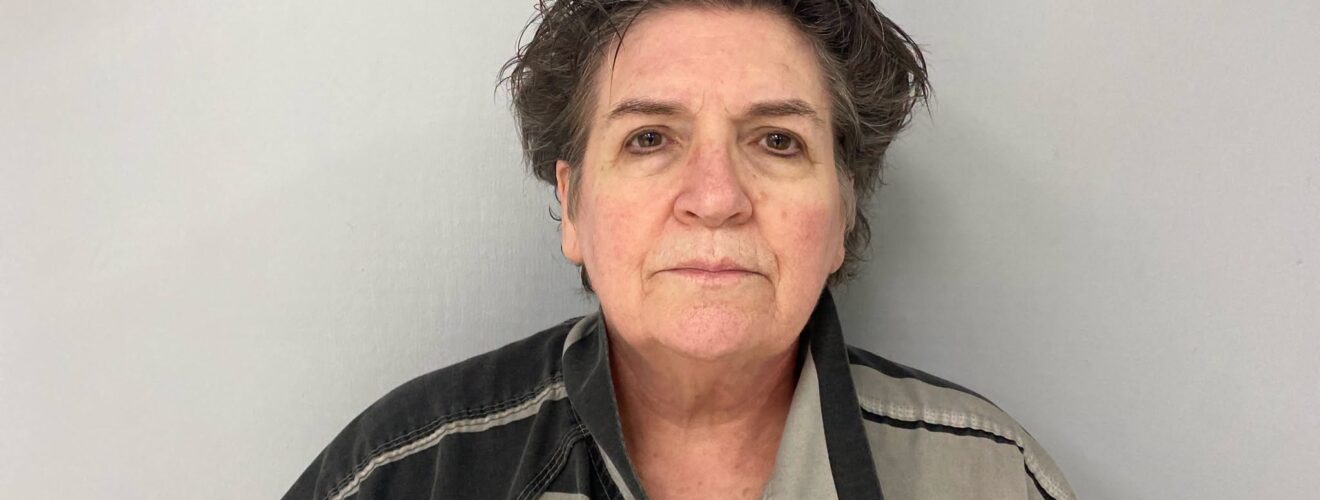
Kore Bommeli was the Oklahoma woman who reported her roommate, Talina Galloway, missing during the early days of the COVID-19 pandemic in April 2020. Her account of Galloway’s disappearance became a focus of a homicide investigation that would uncover a separate attempted-murder case involving ricin poisoning in Wisconsin.
Galloway’s remains were discovered in a wooded area near Mena, Arkansas, in January 2021, nine months after she was reported missing. Authorities ruled her death a homicide and charged Bommeli with first-degree murder and desecration of a human corpse.
For more than five years, Bommeli faced prosecution in Oklahoma while dealing with the consequences of her Wisconsin convictions. In September 2026, days before her scheduled murder trial, she entered a no-contest plea to first-degree manslaughter, desecration of a human corpse and possession of a firearm after a felony conviction.
The agreement resulted in a combined 35-year Oklahoma prison sentence. Her attorneys maintained that she denied responsibility for Galloway’s death, despite her decision to accept the plea agreement.
Bommeli’s case features in NBC’s Dateline episode “Heartless,” airing Friday, October 9, 2026, at 9 p.m. Eastern and 8 p.m. Central. Correspondent Josh Mankiewicz examines the disappearance, the investigation, the discovery of Galloway’s remains and the legal proceedings that brought the case to a conclusion.
- “Heartless”: Dateline NBC Reports on Talina Galloway Homicide October 9 2026
- Who Was Talina Galloway & What Happened to Her? 2026 Update & Profile
Contents
- Where Is Kore Bommeli Now in 2026?
- Who Is Kore Bommeli?
- The Wisconsin Ricin Poisoning Case
- What Is Ricin and Why Was It Part of Her Criminal History?
- Her Life in Oklahoma With Talina Galloway
- The Missing-Person Report That Began the Investigation
- How Investigators Examined Bommeli’s Account
- The Discovery of Talina Galloway’s Remains
- The Murder Charges Against Kore Bommeli
- The Years of Court Proceedings Before Trial
- Why Kore Bommeli Entered a No-Contest Plea
- What Prosecutors Said About the Plea Agreement
- The Breakdown of Bommeli’s 35-Year Oklahoma Sentence
- Does Kore Bommeli Have Two 35-Year Prison Sentences?
- Has Kore Bommeli Admitted Killing Talina Galloway?
- What Dateline NBC’s Heartless Reveals About the Case
- When and Where to Watch Dateline Heartless
- Where the Kore Bommeli Case Stands in October 2026
- More “Heartless”
- More Feature Articles
Where Is Kore Bommeli Now in 2026?
As of October 2026, Kore Bommeli is serving prison sentences arising from criminal cases in Wisconsin and Oklahoma. The Wisconsin case involved convictions for attempted first-degree intentional homicide, while the Oklahoma case concerned the death of her roommate, Talina Galloway.
Under the September 2026 plea agreement, Oklahoma authorities stated that Bommeli would serve her sentence in Wisconsin. Her precise correctional facility and projected release date have not been established in the available reporting.
The Oklahoma court imposed 28 years for first-degree manslaughter, seven years for desecration of a human corpse and five years for possession of a firearm after a felony conviction. The sentencing structure included concurrent and consecutive terms, producing a combined 35-year Oklahoma sentence.
Bommeli was already subject to a 35-year Wisconsin sentence in connection with an attempted poisoning case. The Oklahoma manslaughter term was ordered to run concurrently with that sentence, while the seven-year corpse desecration term was ordered to run consecutively.
The interaction between the sentences means her imprisonment cannot be described as two separate 35-year terms added together. Her actual release eligibility depends on the sentencing orders, time-served credits and correctional calculations.
Who Is Kore Bommeli?
Kore Bommeli became known to the public through two criminal cases involving serious allegations of violence. One originated in Wisconsin and concerned an attempted poisoning involving ricin. The other arose in Oklahoma following the disappearance and death of Talina Galloway.
By April 2020, Bommeli was living in Wagoner County, Oklahoma, and sharing a residence with Galloway. Their living arrangement placed Bommeli among the people with knowledge of Galloway’s home life and circumstances before her disappearance.
Public reporting has focused on Bommeli’s criminal proceedings rather than her childhood, education or employment history. Those personal details have not been established through the available accounts of the case.
Her relationship with Galloway became central to the investigation after Bommeli contacted authorities to report her roommate missing. The explanation she gave would become one of the first major issues examined by investigators.
The subsequent discovery of Galloway’s remains transformed the case into a homicide prosecution and placed Bommeli under scrutiny for both her statements and her alleged actions.
The Wisconsin Ricin Poisoning Case
Years before Talina Galloway disappeared, Bommeli became involved in a criminal case in Wisconsin concerning an alleged attempt to poison two neighbours.
The events dated to 2014 and involved ricin, a toxic substance derived from castor beans. Ricin can cause severe illness or death, depending on the quantity involved and the method of exposure.
Wisconsin prosecutors alleged that Bommeli attempted to kill a neighbouring couple through poisoning. The case resulted in convictions on two counts of attempted first-degree intentional homicide.
Bommeli received a 35-year prison sentence in connection with the Wisconsin convictions. That sentence became significant during the later Oklahoma prosecution because it affected where she would be imprisoned and how additional penalties would be served.
The Wisconsin case was separate from the death of Talina Galloway. Public reporting does not establish that ricin was involved in Galloway’s homicide, and the Oklahoma charges concerned different events.
What Is Ricin and Why Was It Part of Her Criminal History?
Ricin is a potent toxin found in the seeds of the castor oil plant. It interferes with the ability of cells to produce proteins and can cause serious organ damage following sufficient exposure.
The substance has been associated with criminal poisoning investigations because of its toxicity. Exposure can occur through ingestion, inhalation or injection, with symptoms and outcomes depending on the circumstances.
In Bommeli’s Wisconsin case, prosecutors pursued attempted-murder charges involving allegations that she had tried to poison two people. The resulting convictions established criminal responsibility for attempted first-degree intentional homicide.
The earlier case became a point of public interest after Bommeli was charged in connection with Galloway’s death. Investigators and reporters examined her criminal history while the Oklahoma prosecution continued.
The existence of the ricin case did not establish how Galloway died. The two prosecutions involved separate victims, events and legal proceedings.
Her Life in Oklahoma With Talina Galloway
By 2020, Bommeli was living in Wagoner County, Oklahoma, where she shared a home with Talina Galloway. Their relationship as roommates became significant when Galloway disappeared.
The available reporting does not provide a complete account of how the two women met or how long they had lived together. What is established is that Bommeli reported Galloway missing in April 2020 and supplied investigators with an explanation for her absence.
The disappearance occurred during the early stages of the COVID-19 pandemic, when communities across Oklahoma were confronting concerns about infection, testing and quarantine requirements.
Bommeli’s account relied on those circumstances. She told authorities that Galloway had tested positive for coronavirus and left their home after receiving instructions to quarantine.
Investigators sought to verify that explanation, examining whether Galloway had received medical testing or advice that would account for her departure.
The records they obtained did not support the account Bommeli had given.
The Missing-Person Report That Began the Investigation
On April 17, 2020, Bommeli contacted authorities to report that Talina Galloway was missing. The report initiated an investigation by the Wagoner County Sheriff’s Office.
Bommeli told investigators that Galloway had received a positive COVID-19 test and had been advised by a doctor to quarantine. She claimed her roommate had left the home following that advice.
The explanation appeared connected to the public health emergency affecting the country. Investigators examined whether Galloway had sought medical treatment, undergone testing or communicated with a doctor.
Authorities determined that Galloway had not been screened at a hospital and had no documented contact with the doctor identified in Bommeli’s account.
Those findings contradicted the explanation Bommeli had provided and raised questions about the circumstances of the disappearance.
The discrepancy became a significant part of the investigation as deputies worked to establish Galloway’s last known movements and determine whether she had become the victim of a crime.
How Investigators Examined Bommeli’s Account
The Wagoner County Sheriff’s Office investigated the disappearance by collecting statements, examining records and gathering information from people who knew Galloway.
Lt. Danny Elliott and investigator Joel Weber became central figures in the case. Their work continued from the initial missing-person report through the discovery of Galloway’s remains and the criminal proceedings that followed.
Bommeli’s explanation concerning COVID-19 became an important issue because the medical information could not be verified. Investigators had to determine whether the account reflected events that had occurred or provided a misleading explanation for Galloway’s absence.
The investigation developed over several months. Friends, relatives and members of an online community known as Talina’s Army followed the case and sought answers.
The public attention placed the disappearance under scrutiny while authorities continued collecting evidence. Investigators remained responsible for establishing whether criminal conduct had occurred and identifying a person who could be charged.
The case changed when human remains were discovered across the state line in Arkansas.
The Discovery of Talina Galloway’s Remains
In January 2021, human remains were discovered in a wooded area near Mena, Arkansas, in Polk County. Authorities identified them as belonging to Talina Galloway.
The discovery came approximately nine months after Galloway was reported missing. It established that the search had ended in tragedy and prompted investigators to examine how her body had reached Arkansas.
The medical examiner ruled Galloway’s death a homicide. The finding supported the pursuit of criminal charges connected to her death.
Investigators also examined the condition of the remains and the circumstances of their disposal. Prosecutors alleged that Bommeli had dismembered Galloway’s body and pursued a charge of desecration of a human corpse.
The discovery connected the Oklahoma disappearance to a location in another state, requiring cooperation between law enforcement agencies.
Following the recovery of the remains, authorities arrested Bommeli and charged her with first-degree murder and desecration of a human corpse.
The Murder Charges Against Kore Bommeli
Bommeli’s arrest in January 2021 marked the beginning of a lengthy criminal prosecution in Oklahoma. She faced a first-degree murder charge arising from Galloway’s death.
The state also pursued charges involving the treatment of Galloway’s remains. The allegations concerned dismemberment and the handling of her body following the homicide.
Bommeli contested the charges and maintained that she had not killed her roommate. Her defence prepared to challenge the prosecution’s case in court.
The proceedings continued for more than five years, with prosecutors preparing evidence and witnesses for a trial in Wagoner County.
The first-degree murder charge carried severe potential consequences. A conviction would have required the prosecution to prove the elements of that offence beyond a reasonable doubt.
The case did not reach a jury verdict on the original charge. A plea agreement reached in September 2026 changed the legal outcome.
The Years of Court Proceedings Before Trial
Between 2021 and 2026, the Oklahoma prosecution remained unresolved while Bommeli faced criminal charges connected to Galloway’s death.
The case involved the collection and examination of evidence, legal preparation and proceedings concerning the charges. Investigators and prosecutors continued working toward a trial.
Bommeli’s defence maintained her denial of responsibility. The case attracted attention because of the circumstances of Galloway’s disappearance, the discovery of her remains and Bommeli’s Wisconsin criminal history.
By September 2026, a trial had been scheduled in Wagoner County. The proceedings were expected to examine the state’s evidence and the defence’s challenges before a jury.
The trial would have required witnesses to testify about the disappearance, the investigation and the events connected to Galloway’s death.
Instead, prosecutors and defence attorneys reached an agreement shortly before the scheduled trial began.
Why Kore Bommeli Entered a No-Contest Plea
In early September 2026, Bommeli entered a no-contest plea to three charges connected to Galloway’s death.
The original first-degree murder charge was amended to first-degree manslaughter. Bommeli also entered no-contest pleas to desecration of a human corpse and possession of a firearm after a former felony conviction.
Eleven other counts were dismissed as part of the agreement. The plea allowed the court to impose a criminal judgment without a jury trial on the original murder charge.
A no-contest plea, known as nolo contendere, permits a defendant to accept the legal consequences of a criminal charge without making the same formal admission of guilt required by a guilty plea.
Bommeli’s attorney Bryan Cannonie told NBC affiliate KJRH that his client maintained her denial of responsibility for Galloway’s death. He said the defence had expected the case to proceed to trial.
The agreement resolved the prosecution while preserving the distinction between the criminal judgment and Bommeli’s stated position concerning the allegations.
What Prosecutors Said About the Plea Agreement
District Attorney Jack Thorp explained that prosecutors consulted Talina Galloway’s family before offering the plea agreement.
According to his comments to KJRH, the family supported a resolution that would bring the case to a conclusion after years of legal proceedings.
The agreement secured convictions on the manslaughter, corpse desecration and firearm charges without requiring a trial. It also established prison sentences connected to Galloway’s death.
The decision reflected the practical consequences of continuing the prosecution. A jury trial would have required the state to present its evidence and prove the charges beyond a reasonable doubt.
Thorp expressed hope that Bommeli would remain in prison and reflect on the harm caused by the events. His comments reflected the prosecution’s position following the agreement.
The plea did not amount to a jury finding on the original first-degree murder charge, which had been reduced to manslaughter.
The Breakdown of Bommeli’s 35-Year Oklahoma Sentence
The Oklahoma court imposed a combined 35-year sentence following Bommeli’s September 2026 plea.
For first-degree manslaughter, she received 28 years in prison. The sentence included credit for time served and earned since February 3, 2021, and was ordered to run concurrently with her Wisconsin sentence.
For desecration of a human corpse, Bommeli received seven years. That term was ordered to run consecutively, adding to the applicable concurrent sentence.
The firearm conviction resulted in a five-year sentence, ordered to run concurrently with the other counts.
The sentencing structure produced a combined 35-year Oklahoma term. It also determined how the Oklahoma penalties would interact with the prison sentence imposed in Wisconsin.
The state indicated that Bommeli would serve her sentence in Wisconsin, where she was subject to the earlier attempted-murder convictions.
Does Kore Bommeli Have Two 35-Year Prison Sentences?
Bommeli has been sentenced in two separate criminal cases, each involving a reported 35-year term. The Wisconsin sentence arose from the attempted-murder convictions, while the Oklahoma sentence followed her no-contest plea in the Galloway case.
The two terms do not operate as a simple 70-year sentence because the Oklahoma manslaughter term was ordered to run concurrently with the Wisconsin sentence.
The seven-year sentence for desecration of a human corpse was ordered to run consecutively, while the firearm term runs concurrently.
The precise effect of those provisions depends on how correctional authorities calculate the sentences, including credit for time served and applicable release rules.
Public reporting surrounding the September 2026 plea did not establish a definitive projected release date.
What is clear is that Bommeli faces substantial imprisonment under criminal judgments entered in both Wisconsin and Oklahoma.
Has Kore Bommeli Admitted Killing Talina Galloway?
Bommeli has maintained that she did not kill Talina Galloway. Her defence repeated that position after the September 2026 plea agreement.
Attorney Bryan Cannonie told KJRH that his client remained steadfast in her denial of responsibility. He explained that the defence had expected the case to proceed to trial rather than end through a plea.
The no-contest plea allowed Bommeli to accept a criminal judgment on the manslaughter charge without making a formal admission of guilt.
The court imposed the sentence based on the plea, and the criminal case was resolved without a jury verdict on the original first-degree murder allegation.
The distinction is important because the legal outcome establishes a manslaughter conviction, while Bommeli’s stated position remains that she did not commit the killing.
The plea also resulted in convictions for desecration of a human corpse and possession of a firearm after a felony conviction.
What Dateline NBC’s Heartless Reveals About the Case
NBC’s Dateline examines the disappearance and death of Talina Galloway in the episode “Heartless,” reported by Josh Mankiewicz.
The programme features interviews with Bommeli, people who knew Galloway, investigators and attorneys connected to the case.
Friends Kim Littlefield, Greg Thompson and Rachael Parker-Hall provide perspectives on Galloway and the events surrounding her disappearance.
Lt. Danny Elliott and investigator Joel Weber discuss the investigation, while District Attorney Jack Thorp and defence attorneys Rachel Dallis and Ryan Cannonie examine the legal proceedings.
The episode also includes internet sleuth Jess Trevino, who discusses the involvement of Talina’s Army, the online community that followed the disappearance.
The programme revisits the case weeks after the September 2026 plea agreement, allowing it to examine the legal outcome alongside the investigation.
When and Where to Watch Dateline Heartless
“Dateline NBC: Heartless” airs Friday, October 9, 2026, at 9 p.m. Eastern and 8 p.m. Central on NBC.
The two-hour episode is reported by Josh Mankiewicz and examines Talina Galloway’s disappearance, the discovery of her remains and the prosecution of Kore Bommeli.
The programme includes interviews with investigators, attorneys, friends and members of the online community that followed the case.
Viewers can watch through NBC’s scheduled television broadcast. Streaming availability can be checked through Peacock following the broadcast, subject to the platform’s release schedule.
The episode arrives after the Oklahoma prosecution reached its conclusion, providing an opportunity to examine the case from the initial missing-person report through the September 2026 sentence.
Where the Kore Bommeli Case Stands in October 2026
Kore Bommeli remains imprisoned following convictions arising from two separate criminal cases. In Wisconsin, she received a 35-year sentence for attempted first-degree intentional homicide involving allegations of ricin poisoning.
In Oklahoma, she received a combined 35-year sentence after entering no-contest pleas to first-degree manslaughter, desecration of a human corpse and possession of a firearm after a felony conviction in connection with Talina Galloway’s death.
The Oklahoma plea agreement resolved the case without a jury trial on the original first-degree murder charge. Bommeli maintained her denial of responsibility, while the court imposed sentences on the charges covered by the agreement.
Oklahoma authorities indicated that she would serve her sentence in Wisconsin. Her exact facility and projected release date have not been confirmed through current correctional records.
The legal proceedings brought a conclusion to a case that began with a missing-person report in April 2020 and continued for more than six years.
For Talina Galloway’s family and friends, the case remains centred on the loss of a woman whose disappearance prompted a prolonged search and a homicide investigation. Bommeli’s prison sentence represents the legal outcome of that investigation, while NBC’s “Heartless” revisits the events and the people affected by them.
More “Heartless”
- “Heartless”: Dateline NBC Reports on Talina Galloway Homicide October 9 2026
- Who Was Talina Galloway & What Happened to Her? 2026 Update & Profile
- Who Is Kore Bommeli & Where Is She Now? 2026 Update & Profile



1 Response
[…] Who Is Kore Bommeli & Where Is She Now? 2026 Update & Profile […]