


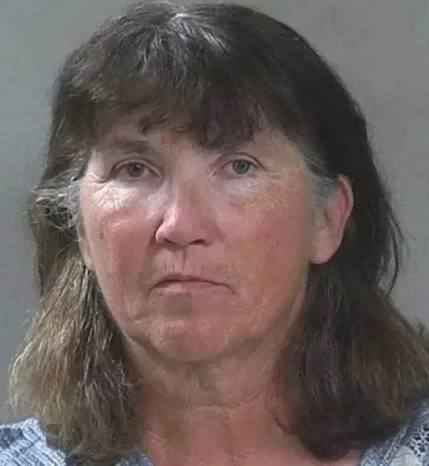
Tracey Marie Grist was a Utah mother and grandmother whose American Fork home became the scene of the July 2024 murder of her son-in-law, Matthew “Matt” Restelli. Two years later, a jury found that Grist had done far more than witness the killing: she was convicted of murder and conspiracy after prosecutors argued that she helped create and direct the plan that brought Matthew from California to the house where her son shot him seven times.
Her case is a central part of Dateline NBC’s Season 35 premiere, “The Family Plot,” airing Friday, September 25, 2026. The two-hour episode examines the collapse of Matthew’s marriage to Grist’s daughter, Kathryn Restelli, the decision to bring Matthew to Utah, the effort to make his death appear to be self-defence, and the criminal cases that eventually sent Grist and two of her children to prison.
Grist, now 61, maintained her innocence through her April 2026 trial. She took the witness stand and denied helping arrange Matthew’s death. Jurors rejected that account, finding her guilty on every charge they considered. On June 10, 2026, she received consecutive maximum sentences that could keep her imprisoned for the rest of her life.
- “The Family Plot”: Dateline NBC Reports on Matt Restelli Homicide September 26 2026
- Who Was Matt Restelli & What Happened to Him? 2026 Update & Profile
- Who Is Kathryn Restelli & Where Is She Now? 2026 Update & Profile
- Who Is Kevin Ellis & Where Is She Now? 2026 Update & Profile
Contents
- Who Is Tracey Grist?
- Kathryn Restelli Comes to Her Mother for Help
- The Murder Idea Kathryn Said Began as a Joke
- Kathryn Said Her Mother Refused to Stop
- Kevin Ellis Becomes Part of the Plan
- The AirTag That Followed Matthew’s Movements
- How Matthew Was Brought to Grist’s House
- Preparations Before Matthew Arrived
- Matthew Walks Into the American Fork Home
- The Knife Became Evidence of Staging
- Questions About Grist’s 911 Call
- Grist Told Matthew’s Mother That Her Son Was Dead
- Police Arrest Grist Months After the Shooting
- Grist’s Internet Searches Became Part of the Case
- Kathryn Turns State Witness
- Tracey Grist Goes on Trial
- Grist Takes the Stand and Denies Everything
- Prosecutors Called Grist the Centre of the Conspiracy
- The Jury Finds Tracey Grist Guilty
- What Was Said About Grist’s Life at Sentencing
- Matthew’s Family Confronts Grist
- Tracey Grist Refuses to Speak at Sentencing
- Tracey Grist Receives the Maximum Sentence
- The Judge Said He Expected Grist to Die in Prison
- Where Is Tracey Grist Now?
- Could Tracey Grist Ever Be Released?
- What Happened to Grist’s American Fork Family?
- Grist Still Denies the Account That Convicted Her
- How Tracey Grist Fits Into Dateline’s “The Family Plot”
- Where Tracey Grist’s Story Stands Today
- More “The Family Plot”
- More Feature Articles
Who Is Tracey Grist?
Tracey Grist lived in American Fork, Utah, and was the mother of Kathryn Restelli and Kevin Ellis, the two other defendants prosecuted in connection with Matthew Restelli’s death. Trial testimony indicated that she had several other children and had been married four times. Her former husband Stan Ellis is among the people interviewed for Dateline’s examination of the case.
Grist’s family home became important after Kathryn’s marriage began to unravel in 2024. Kathryn had been married to Matthew for about seven and a half years and the couple had two young children together. Matthew and Kathryn lived on rural property in California, but Kathryn turned to her mother as problems in the marriage intensified.
Kathryn communicated with Grist about wanting to leave Matthew. By June 2024, she had decided to travel to Utah with the children and stay with her mother. What happened during the following weeks became the foundation of the murder case against Grist.
Prosecutors would later describe her not as a relative drawn into her daughter’s crisis but as the central organiser of a plan to remove Matthew from the family permanently. Grist denied that description from the witness stand.
Kathryn Restelli Comes to Her Mother for Help
Kathryn left California in June 2024 with her two young children and moved into Grist’s American Fork home.
She later testified that she had become convinced her marriage was over. She was worried about custody and about whether she would be able to remain in Utah with the children if she went through a divorce. Kathryn said she had been discussing those fears with her mother.
Grist became involved in helping Kathryn separate from Matthew. According to testimony, she helped with arrangements intended to allow Kathryn to establish herself away from him.
Those actions were not criminal in themselves. The prosecution case centred on what happened next.
Kathryn testified that discussions inside Grist’s home shifted from ending the marriage to ending Matthew’s life.
The Murder Idea Kathryn Said Began as a Joke
At Grist’s trial, Kathryn said her mother first raised the idea of killing Matthew after Kathryn had been in Utah for about a week.
Kathryn described the initial conversation as something that sounded like a joke: Matthew could be encouraged to come to Utah, killed after entering the house and then portrayed as an intruder who had been shot in self-defence.
The idea did not remain a joke, according to Kathryn.
She testified that the family began discussing how the scenario could work and that Grist became committed to carrying it out. Kathryn admitted she participated in those discussions and pleaded guilty to her own role before Grist went to trial.
The prosecution would later tell jurors that Grist was the “hub” or “mission control” of the conspiracy. That was the state’s characterization, not a neutral fact about her personality, but the jury ultimately accepted the prosecution’s central allegation that she participated in the murder plan.
Kathryn Said Her Mother Refused to Stop
Kathryn’s most damaging testimony concerned what she said happened when she reconsidered the plan.
She testified that she began thinking about the consequences of killing another person and told Grist that she no longer wanted Matthew murdered.
According to Kathryn, her mother refused.
Kathryn testified that Grist told her she did not care and intended to proceed with the plan.
That testimony became central to the prosecution’s effort to portray Grist as the person who kept the scheme moving when her daughter hesitated.
Grist denied the conversation happened as Kathryn described it.
Her defence argued that Kathryn was an admitted participant who had secured a plea agreement and had a reason to shift responsibility onto her mother.
Kevin Ellis Becomes Part of the Plan
Grist’s son Kevin Ellis was living at or spending substantial time at the American Fork house.
Kathryn testified that her mother brought Ellis into the plan. Prosecutors said Ellis would provide the gunfire while Grist and Kathryn created the circumstances that brought Matthew through the front door.
Ellis later acknowledged that he fired the shots that killed Matthew but maintained at trial that he acted in self-defence.
A jury rejected the self-defence claim and convicted Ellis of murder.
The same jury acquitted him of conspiracy, meaning prosecutors did not prove beyond a reasonable doubt in his trial that he joined the charged conspiracy in the legal form alleged.
That outcome did not prevent a different jury from later convicting Grist of conspiracy based on the evidence presented in her case.
The AirTag That Followed Matthew’s Movements
Before Kathryn left California, she placed an Apple AirTag in Matthew’s vehicle.
Kathryn testified that family members, including Grist, had access to the tracker. Investigators later recovered the device and found communications concerning Matthew’s location.
The AirTag allowed members of the family to know where Matthew was as events moved toward July 12.
That evidence became important because the original version of the shooting centred on Matthew arriving at the home and allegedly presenting a threat.
The tracking evidence showed that his movements were not a surprise.
Prosecutors used it with the family communications to show that Matthew’s arrival was anticipated and followed.
How Matthew Was Brought to Grist’s House
Matthew believed he was travelling to Utah to collect Kathryn and their children.
Kathryn had initially been expected to arrange transportation back to California. When that did not happen, Matthew decided to make the trip himself.
Kathryn remained in contact with him during the drive and gave him reason to believe a reconciliation might still be possible.
She also told Matthew that Grist’s front door would be unlocked and that he could enter when he arrived.
Kathryn later admitted that this instruction had another purpose: if Matthew walked inside without someone opening the door for him, his entry could be portrayed after his death as unauthorized.
Grist knew that Matthew was driving from California and was expected at the house around 10 p.m. She acknowledged that fact when she testified at trial, despite saying she was surprised when she saw him inside the home.
Preparations Before Matthew Arrived
Prosecutors argued that events inside Grist’s house before Matthew arrived showed that the family was preparing for bloodshed.
Kathryn testified that furniture and belongings were moved and that blankets were placed over furniture. She said these steps were intended to protect the room from blood.
The prosecution also presented evidence concerning a knife that would become crucial after Matthew was shot.
Kathryn testified that before the killing she saw a knife that Grist intended to use as part of the self-defence story.
The plan, according to Kathryn, was to place it in Matthew’s hand after he was shot.
Grist rejected that accusation.
The later forensic evidence, however, caused investigators to conclude that the knife found with Matthew did not belong in the position in which police discovered it.
Matthew Walks Into the American Fork Home
Matthew arrived at Grist’s house on July 12, 2024.
His wife and children were inside.
Kevin Ellis was also there.
Matthew entered through the door as Kathryn had instructed him.
Within moments, Ellis fired seven shots.
Matthew, 42, died inside his mother-in-law’s house.
Police initially encountered a scene that could support the claim that Ellis had defended himself from an armed man: a knife was associated with Matthew’s hand.
The investigation began dismantling that story.
The Knife Became Evidence of Staging
Investigators questioned the placement of the knife almost from the beginning.
Matthew was left-handed, while the knife was associated with his non-dominant hand.
At Grist’s trial, crime-scene expert Patrick Zirpoli testified that the orientation of the knife did not fit with Matthew holding it while he was shot and falling to the floor. His conclusion was that the knife appeared to have been placed in Matthew’s hand after his death.
Kathryn’s account offered an explanation.
She testified that after the shooting she heard Grist and Ellis discussing placing the knife in Matthew’s hand.
She said she heard Ellis warn Grist to be careful because Matthew might still be alive.
That testimony, combined with the forensic evidence, became central to the state’s obstruction case against Grist.
Questions About Grist’s 911 Call
The timing of the emergency calls also drew investigators’ attention.
Detective Joseph Nordin testified that a neighbour called 911 at approximately 10:09 p.m., while Grist’s own call was made at about 10:15 p.m.
The gap raised questions about what occurred inside the house between the shooting and Grist’s contact with emergency services.
Grist told police she heard shots, went to check on Kathryn and saw Matthew face down.
Body-camera footage, statements from Ellis and Grist, and the physical scene were collected as investigators tried to reconstruct the order of events.
Police began comparing what family members were saying with the digital evidence they recovered.
The inconsistencies moved the investigation away from a straightforward self-defence shooting.
Grist Told Matthew’s Mother That Her Son Was Dead
One of the striking parts of the later trial involved calls between Grist and Matthew’s family.
Matthew’s mother, Diane Restelli, testified that Grist was the person who told her that her son had died.
Recordings of subsequent calls were played for jurors.
Diane testified that during one conversation with Kathryn, she could hear Grist in the background helping shape Kathryn’s answers.
Diane also questioned why a firearm had been necessary if the shooting had happened as the family claimed.
Those calls became part of the larger body of evidence investigators used when examining whether the family was maintaining a coordinated account.
Police Arrest Grist Months After the Shooting
Ellis was arrested within days of Matthew’s death.
The investigation into Kathryn and Grist continued for months.
Detectives searched electronic devices, messages, location records and internet activity.
On October 29, 2024, Kathryn and Grist were arrested.
Grist was accused of murder, conspiracy to commit murder, obstruction of justice and domestic violence in the presence of children.
The arrests marked a major change in the case.
The shooting was no longer being treated as an incident involving only Ellis.
Police were alleging that Matthew’s wife and mother-in-law had helped engineer the circumstances that led to his death.
Grist’s Internet Searches Became Part of the Case
Prosecutors also examined Grist’s internet history.
Among the material discussed at trial were searches concerning the killing of Florida State University professor Dan Markel and people connected to that case.
The Markel murder became a major national case because prosecutors alleged that members of his former wife’s family arranged his killing amid a bitter custody dispute.
Prosecutors in Utah suggested that the similarities were significant.
Grist offered another explanation.
She testified that she followed true-crime stories and that her interest in the Markel case did not mean she was using it as a blueprint.
The searches were circumstantial evidence rather than proof on their own, and jurors were required to consider them alongside the rest of the case.
Kathryn Turns State Witness
The case changed in July 2025 when Kathryn accepted a plea agreement.
She pleaded guilty to reduced murder and conspiracy charges and agreed to testify truthfully against members of her family.
That gave prosecutors something they had not previously possessed: testimony from a participant who could describe private conversations inside the family.
Kathryn testified first against Ellis in January 2026.
She then became the first witness called against Grist at her April trial.
For Grist, the testimony meant that her daughter was now sitting across the courtroom describing her as the person who refused to abandon the murder plan.
Tracey Grist Goes on Trial
Grist’s trial began in Provo in April 2026.
She faced murder, conspiracy to commit murder, obstruction of justice and two counts of domestic violence in the presence of a child.
The state’s case combined Kathryn’s testimony with physical and digital evidence.
Prosecutors presented the AirTag, messages, evidence about Matthew’s journey, the knife, crime-scene reconstruction, body-camera footage and details of what happened before and after the shooting.
The prosecution argued that Grist sat at the centre of the conspiracy.
Her lawyers presented a different explanation.
They said Ellis was responsible for Matthew’s death and that prosecutors had transformed a chaotic family situation into a conspiracy that did not exist.
Grist Takes the Stand and Denies Everything
Grist made the significant decision to testify in her own defence.
She denied planning Matthew’s murder.
When asked whether she had recruited her son to kill Matthew or participated in a plot, she rejected the accusation.
She offered explanations for pieces of evidence prosecutors considered suspicious.
She said that comments about killing Matthew had been jokes rather than plans.
She disputed Kathryn’s account.
She said she did not expect Matthew simply to walk into the house, despite knowing he was travelling from California and was expected that evening.
Her testimony put her credibility in direct competition with her daughter’s.
The jury had to decide which account was supported by the wider evidence.
Prosecutors Called Grist the Centre of the Conspiracy
In closing arguments, Deputy Utah County Attorney Adam Pomeroy described Grist as the “hub” and “mission control” of the plot.
The state argued that communication flowed through her and that her home became the location where the plan was completed.
Prosecutors stressed that Ellis pulling the trigger did not prevent others from being legally responsible for murder.
Utah law allows a person to be held criminally responsible for a killing when that person intentionally solicits, encourages or assists the conduct under the required circumstances.
The defence said prosecutors were forcing unrelated evidence into an implausible theory.
Jurors received the case on April 21, 2026.
The Jury Finds Tracey Grist Guilty
The jury deliberated for about five hours.
It convicted Grist on every charge.
She was found guilty of first-degree felony murder, second-degree felony conspiracy to commit murder, second-degree felony obstruction of justice and two third-degree felony counts of domestic violence in the presence of a child.
The verdict meant the jury rejected Grist’s sworn denial that she had participated in a murder plan.
It also established her criminal responsibility for Matthew’s death even though Ellis fired the gun.
By then, all three principal defendants had been convicted or pleaded guilty.
Kathryn had admitted her role.
Ellis had been convicted of murder.
Grist had now been convicted of murder and conspiracy.
What Was Said About Grist’s Life at Sentencing
Grist’s sentencing hearing gave Matthew’s family an opportunity to speak about matters that had not been central to the murder trial.
Members of the Restelli family made a series of allegations about Grist’s past conduct and relationships.
Matthew’s brother Jonathan accused Grist of years of manipulation, theft and exploitation. He also stated in court that she had worked in prostitution and referred to a prostitution charge connected with the time of her arrest. These were allegations made in a victim-impact statement rather than findings that formed the basis of her murder conviction.
Jonathan also accused Grist of taking wedding gift money belonging to Matthew and Kathryn.
Those claims illustrated the depth of hostility between the families by the time sentencing occurred.
They should be distinguished from the conduct for which Grist was actually convicted: Matthew’s murder, the conspiracy, obstruction and the domestic-violence offences.
Matthew’s Family Confronts Grist
Matthew’s relatives focused on the destruction left by his killing.
His brother Mark spoke about losing a brother while Matthew’s children lost their father.
Diane Restelli described the impact of her son’s death and accused Grist of having wanted Matthew removed from the family.
The children also became part of the court’s focus.
They had been inside Grist’s home when their father was killed.
Their mother was now imprisoned.
Their uncle had been convicted of shooting their father.
Their grandmother was awaiting a sentence for helping bring about the killing.
The criminal case had removed several members of their immediate family at once.
Tracey Grist Refuses to Speak at Sentencing
Unlike Kathryn, who apologised at her sentencing, Grist did not address the court before she was sentenced on June 10, 2026.
She had maintained her innocence at trial.
Judge Roger Griffin then delivered a severe assessment of both the crime and Grist’s future.
He described the killing as one of the most senseless cases he had encountered during more than three decades in Utah’s legal system.
He expressed concern about what Grist might do if she were returned to the community.
Tracey Grist Receives the Maximum Sentence
Griffin imposed the maximum sentence available on each conviction.
Grist received:
15 years to life for murder.
One to 15 years for conspiracy to commit murder.
One to 15 years for obstruction of justice.
Up to five years for each of the two domestic-violence counts.
The judge ordered the sentences to run consecutively rather than at the same time.
That structure is crucial.
It means Grist does not simply become eligible for consideration after serving the 15-year minimum on the murder conviction. The consecutive terms substantially extend the period she faces before any realistic prospect of release.
Utah’s Board of Pardons and Parole ultimately controls parole decisions within the bounds of the sentences.
The Judge Said He Expected Grist to Die in Prison
Griffin went further than imposing the consecutive sentences.
He placed on the record his recommendation that Grist never receive parole.
The judge said he expected her to remain imprisoned for the rest of her life.
That recommendation is not the same as a sentence of life without parole.
Utah’s Board of Pardons and Parole has the final authority over any future release decision.
The distinction matters.
Grist has not been sentenced under a formal life-without-parole order.
She does, however, face consecutive indeterminate sentences and a sentencing judge who has asked the parole board never to release her.
Where Is Tracey Grist Now?
As of September 2026, Tracey Grist is serving her Utah state prison sentence.
The latest reliable public reporting confirms that she was sent to prison following her June 10 sentencing. The Utah Department of Corrections maintains custody records for people incarcerated under state sentences and provides a public offender-search service.
I could not verify from an authoritative public record a specific current housing unit or prison facility for Grist, so it would be inaccurate to state that she is housed at a particular institution.
Her status is much clearer than her precise location: she is not free, on probation or awaiting trial.
She is a convicted state prisoner serving the consecutive sentences imposed in June 2026.
Could Tracey Grist Ever Be Released?
Legally, parole remains possible because the murder sentence is 15 years to life rather than life without parole.
Practically, her case presents significant barriers to release.
The murder sentence is followed by consecutive terms for conspiracy, obstruction and the domestic-violence convictions.
In addition, Griffin expressly recommended that she never be granted parole.
The Board of Pardons and Parole is not bound to follow the judge’s recommendation forever, but it can consider his comments along with the offences, Grist’s conduct, prison record, risk assessment, victim input and other factors.
There is therefore no meaningful fixed release date that can be given for Grist.
Her sentences expose her to imprisonment for the remainder of her life.
What Happened to Grist’s American Fork Family?
The murder case dismantled the immediate family unit that had been gathered at Grist’s house in July 2024.
Kathryn is in prison after pleading guilty.
Ellis is in prison after his murder conviction.
Grist is in prison after her murder and conspiracy convictions.
Matthew is dead.
The children who were inside the home when their father was killed were placed into protective custody during the investigation.
Matthew’s relatives later described taking responsibility for helping raise and care for the children.
The outcome means the plan prosecutors said was intended to solve Kathryn’s marriage and custody problems produced the opposite result: her husband died and Kathryn lost both her freedom and ordinary contact with her children.
Grist Still Denies the Account That Convicted Her
An important distinction remains between the legal verdict and Grist’s own position.
Grist did not confess.
She did not enter a plea bargain.
She went to trial and denied participating in the murder.
She testified under oath that there was no murder plan involving her.
The jury did not believe that defence beyond the point required to acquit her.
Its guilty verdict is the legal outcome of the case.
Kathryn’s allegations about private conversations are testimony from an admitted co-conspirator, but they were presented alongside independent evidence that included digital communications, tracking data, the circumstances of Matthew’s arrival, the timing of the emergency calls and forensic evidence concerning the knife.
How Tracey Grist Fits Into Dateline’s “The Family Plot”
Dateline NBC’s “The Family Plot” examines how a marital separation became a homicide case involving a mother and two of her adult children.
Grist occupies a central position in that story because the killing happened in her home and because prosecutors alleged she was the person who kept the plan moving.
Correspondent Josh Mankiewicz examines the evidence and speaks with people from both sides of the family, including Grist’s former husband Stan Ellis and her former best friend Teri Bishop.
The episode also features investigators and prosecutors who built the case, along with relatives of Matthew who watched the initial self-defence account develop into three criminal prosecutions.
By the time Dateline airs the story, the question of Grist’s criminal responsibility has been decided by a jury.
Where Tracey Grist’s Story Stands Today
Tracey Grist entered the case as the homeowner who told police that her son had shot her son-in-law.
She ended it as a convicted murderer.
The prosecution contended that Matthew was tracked as he travelled to Utah, persuaded to enter Grist’s home and killed within moments of walking through the door. The state said the knife used to support the self-defence account was then placed with his body.
Grist denied planning any of it.
A Utah jury convicted her of murder, conspiracy and obstruction.
Judge Roger Griffin imposed consecutive maximum sentences and recommended that she never be paroled.
As of September 2026, Grist remains incarcerated under the Utah Department of Corrections and faces the possibility that she will spend the rest of her life in prison.
For the Restelli family, her imprisonment is the final major criminal outcome in a case that began with Matthew believing he was making a journey to Utah to reunite with his wife and children.
For Grist, that same journey resulted in a murder conviction and a sentence from which she may never return home.
Dateline NBC: “The Family Plot” airs Friday, September 25, 2026, at 9 p.m. ET/8 p.m. CT on NBC.
More “The Family Plot”
- “The Family Plot”: Dateline NBC Reports on Matt Restelli Homicide September 26 2026
- Who Was Matt Restelli & What Happened to Him? 2026 Update & Profile
- Who Is Kathryn Restelli & Where Is She Now? 2026 Update & Profile
- Who Is Tracey Grist & Where Is She Now? 2026 Update & Profile
- Who Is Kevin Ellis & Where Is She Now? 2026 Update & Profile