
Who Was Harold Allen & What Happened to Him? 2026 Update & Profile
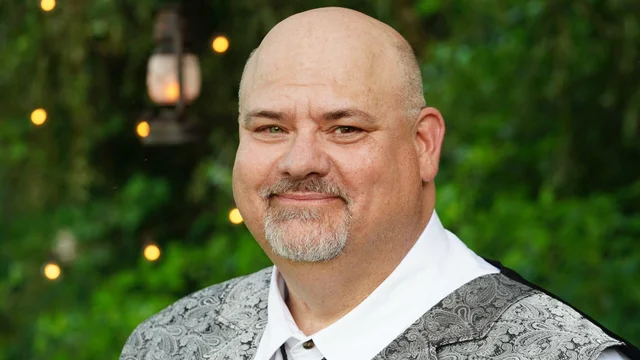
Harold Allen did not die in a way that first looked like murder.
The Freetown, Indiana man died in December 2022 during the Christmas season, a time of year that had long held special meaning for him. Those who knew Harold remembered his enthusiasm for Christmas, a defining part of his personality that would later inspire the title of NBC’s Dateline episode “The Man Who Loved Christmas.”
At the time of his death, authorities believed Harold had died from natural causes. There was no gunshot wound, no stabbing and no visible crime scene suggesting that someone had attacked him. His death did not trigger a homicide investigation.
That understanding survived for months.
Then an unrelated burglary produced an allegation investigators could not ignore. A man arrested after the burglary of the home of Harold’s widow, Marsha Allen, told police that Harold had not died naturally at all. He said Marsha and her daughter had plotted to poison him.
What followed was an investigation built around electronic messages, toxic chemicals and a root beer float that prosecutors said contained ethylene glycol.
By the time the case was resolved, authorities had concluded that Harold had been murdered inside his own home through a poisoning scheme hidden behind what looked like illness.
- “The Man Who Loved Christmas”: Dateline NBC Reports on Harold Allen Homicide September 18 2026
- Who Was Marsha Allen & Where Is She Now? 2026 Update & Profile
Contents
- Harold Allen Lived in Freetown, Indiana
- Harold’s Death Initially Appeared Natural
- A Burglary Changed Everything
- Detectives Reopen the Circumstances of Harold’s Death
- Ethylene Glycol Becomes the Focus of the Investigation
- Harold Was Served a Poisoned Root Beer Float
- Investigators Believe the Poisoning Was Planned
- Harold Never Knew the Investigation That Followed
- Marsha Allen Became a Central Suspect
- Marsha’s Death Changed the Criminal Case
- Harold’s Stepdaughter Faces Prosecution
- The Case Ends With Guilty Pleas
- A 50-Year Prison Sentence Follows
- Poisoning Allowed the Crime to Resemble Illness
- The Burglary Became the Break Investigators Needed
- Harold Became the Victim in a Case He Was Never Able to Tell
- Harold’s Family Learned a Different Truth About His Death
- What Happened to Harold Allen
- Remembering Harold Beyond the Poisoning
- Dateline Tells Harold Allen’s Story
- More “The Man Who Loved Christmas”
- More Feature Articles
Harold Allen Lived in Freetown, Indiana
Harold Allen lived in Freetown, a small community in Jackson County, Indiana.
To the people who knew him, Harold was more than the victim in a murder investigation. His connection to Christmas became one of the details family members and producers chose to emphasize when telling his story. Dateline titled its report “The Man Who Loved Christmas,” placing Harold rather than the crime at the center of the episode.
That title also carries a grim contrast.
Harold died during the Christmas season in December 2022. At the time, his family had no reason to believe his death resulted from a deliberate act.
The case would later become associated with antifreeze, secret messages, poison purchases and conspiracy charges, but none of those facts were known when Harold died.
His death appeared medical.
That appearance allowed the truth to remain concealed.
Harold’s Death Initially Appeared Natural
The first conclusion about Harold’s death gave investigators no immediate reason to suspect homicide.
There was no violent scene to preserve and no obvious weapon to collect. Harold had not been shot or beaten. Nothing at the scene told authorities that another person might have caused his death.
Poisoning can create a different investigative problem.
A toxic substance can produce symptoms that resemble severe illness or organ failure. If doctors and investigators do not have a reason to suspect a specific poison, they may have no reason to test for it.
That was central to what happened in Harold’s case.
His death was treated as natural, and the people around him continued with their lives.
There was no immediate homicide investigation.
There was no suspect.
There was no known murder weapon.
Months would pass before police learned that Harold’s death might require a second look.
A Burglary Changed Everything
The first major break in Harold’s case came from a crime that appeared to have nothing to do with his death.
In September 2023, about nine months after Harold died, someone burglarized the home of his widow, Marsha Allen.
Police investigated the break-in and arrested a suspect.
During that investigation, the suspect made a claim that transformed the case.
He told police that Marsha and her daughter had conspired to poison Harold.
Investigators now faced an unusual problem.
The allegation came from someone involved in another crime. They could not treat his statement as proof.
They needed evidence.
If Harold had been murdered, detectives needed to establish how he had been killed, what substance had been used and whether there was evidence connecting anyone to a plan.
The burglary suspect had given police a lead.
The next step was to determine whether that lead was true.
Detectives Reopen the Circumstances of Harold’s Death
Investigators began examining Harold’s death through a new lens.
Instead of asking how a man had died from illness, they began asking whether his symptoms could have resulted from poisoning.
They also examined communications involving the people identified by the burglary suspect.
The investigation produced evidence that authorities believed corroborated the allegation.
Text messages became central to the case.
According to investigators, those communications documented discussions about poisoning Harold.
The messages also helped police identify the toxic substance they believed had been used.
That substance was ethylene glycol.
Ethylene Glycol Becomes the Focus of the Investigation
Ethylene glycol is a toxic chemical commonly associated with antifreeze.
When ingested, it can cause severe poisoning and can be fatal.
Investigators concluded that the chemical had been obtained for use against Harold.
According to the prosecution’s case, Harold’s stepdaughter purchased ethylene glycol and supplied it to Marsha.
That allegation mattered because it suggested planning.
The poison did not appear inside Harold’s home by chance.
Authorities believed someone had first obtained the substance and then found a way to give it to Harold without telling him what he was consuming.
The method investigators described was both simple and difficult for a victim to recognize.
The poison was placed in a root beer float.
Harold Was Served a Poisoned Root Beer Float
According to authorities, Marsha served Harold a root beer float containing ethylene glycol.
To Harold, it would have appeared to be an ordinary drink.
Investigators concluded that it was instead the means by which he was poisoned.
That detail helps explain why Harold’s death produced no immediate homicide investigation.
There was no obvious attack.
No one had forced poison into his mouth in front of witnesses.
The substance had allegedly been concealed inside something he accepted and consumed at home.
By the time Harold became gravely ill, there was nothing about the root beer float itself that would necessarily have caused medical personnel or investigators to suspect murder.
The method turned an ordinary household moment into what authorities would later identify as the fatal act.
Investigators Believe the Poisoning Was Planned
The electronic communications became critical because they suggested that Harold’s death was not the result of a spontaneous act.
According to investigators, messages documented elements of the plan and connected Marsha and her daughter to discussions surrounding the poisoning.
The messages gave police something they had lacked when Harold died: context.
A death that had appeared natural could now be examined alongside communications discussing poison.
The alleged purchase of ethylene glycol could be examined alongside the claim that Harold had consumed the substance.
The burglary suspect’s allegation could be compared with evidence created before Harold’s death.
What had first sounded like an extraordinary accusation now had information that investigators believed supported it.
The case was becoming a homicide investigation.
Harold Never Knew the Investigation That Followed
One of the most disturbing features of the case is that Harold did not know his death would later be understood as murder.
He died while the poisoning remained hidden.
His family initially lived with the belief that his death resulted from natural causes.
There was no arrest in the days after his death and no public warning that police suspected foul play.
The people later identified by investigators as participants in the poisoning remained outside any homicide prosecution for months.
The truth began emerging only because of the September 2023 burglary.
Without that unrelated crime, authorities might never have received the information that prompted them to reconsider Harold’s death.
Marsha Allen Became a Central Suspect
As detectives examined the evidence, Harold’s widow, Marsha Allen, became central to the investigation.
Authorities alleged that Marsha was the person who administered the poison.
According to the case developed by investigators, her daughter obtained ethylene glycol and Marsha placed the substance in the root beer float served to Harold.
That remained an allegation rather than a conviction against Marsha.
She would never stand trial.
As investigators closed in on the circumstances surrounding Harold’s death, Marsha died by suicide in October 2023.
Her death ended the possibility of prosecuting her.
No jury heard a criminal case against Marsha.
No court entered a murder conviction against her.
Investigators instead had to reconstruct what they believed she had done through the communications and other evidence recovered during the investigation.
Marsha’s Death Changed the Criminal Case
Marsha’s death created a significant legal difference between what investigators believed and what prosecutors could establish in court.
Authorities could continue describing the evidence they said linked her to Harold’s poisoning, but Marsha could no longer be charged or tried.
That meant the justice system would never produce a verdict determining her criminal responsibility.
The prosecution instead focused on Harold’s stepdaughter.
Authorities alleged that she had played a direct role in obtaining the poison used in the plot.
According to prosecutors, she purchased the ethylene glycol and gave it to Marsha.
Even though prosecutors did not allege that she was necessarily the person who handed Harold the fatal drink, her alleged role in obtaining the poison and participating in the plan exposed her to criminal liability.
Harold’s Stepdaughter Faces Prosecution
Prosecutors built their case around the alleged conspiracy.
They examined who obtained the poison, what had been discussed before Harold’s death and how the electronic communications fit with the events that followed.
The case continued for almost two years after Marsha died.
A trial could have required prosecutors to present the communications and other evidence before a jury.
The defense could then have challenged the meaning of those messages, the strength of the forensic evidence and whether prosecutors had proved each charge beyond a reasonable doubt.
That did not happen.
The case ended through a guilty plea.
The Case Ends With Guilty Pleas
In September 2025, Harold’s stepdaughter pleaded guilty to charges that included conspiracy to commit murder and attempted murder.
The plea eliminated the need for a trial.
That distinction matters when recounting Harold’s case.
There was no full trial in which a jury heard every piece of evidence surrounding the poisoning.
Instead, the surviving defendant accepted criminal responsibility through the plea process.
The court then moved to sentencing.
The punishment was severe.
A 50-Year Prison Sentence Follows
Harold’s stepdaughter received a 50-year prison sentence.
The sentence came almost three years after Harold died.
By then, the understanding of Harold’s death had changed completely.
In December 2022, authorities believed he had died naturally.
In September 2023, a burglary suspect told police there was another explanation.
Investigators then uncovered messages and evidence surrounding ethylene glycol.
Marsha died before she could be prosecuted.
The remaining criminal case ended with a guilty plea and a 50-year sentence.
The legal outcome did not restore the opportunity to prosecute every person authorities believed had participated in the plot, but it did establish criminal responsibility for the conspiracy surrounding Harold’s death.
Poisoning Allowed the Crime to Resemble Illness
Harold’s case demonstrates one of the challenges investigators face in suspected poisonings.
A firearm can leave a bullet, a wound and a crime scene.
A knife can leave visible injuries and blood.
Poison can leave a victim who appears to have suffered a catastrophic medical event.
If nobody has reason to suspect toxic exposure, the death may not generate the tests required to identify the substance.
That appears to have been one reason Harold’s death escaped scrutiny at first.
The alleged use of a root beer float made the method more difficult for Harold himself to recognize.
He was not knowingly drinking antifreeze.
According to investigators, he consumed a familiar dessert that had been turned into a delivery mechanism for ethylene glycol.
By the time detectives learned what to look for, Harold had been dead for months.
The Burglary Became the Break Investigators Needed
Without the burglary of Marsha’s home, Harold’s death might have remained classified as natural.
That is one of the most extraordinary elements of the case.
Police did not solve Harold’s death because someone came forward during the original investigation.
There was no original murder investigation.
The information emerged because officers arrested a man suspected of another crime.
Even then, his allegation was only the beginning.
Detectives still had to find evidence that supported what he was saying.
The electronic communications gave investigators a record they could examine against the timeline of Harold’s illness and death.
The alleged poison purchase supplied another piece.
Together, investigators believed those elements established that Harold’s death had not been natural.
Harold Became the Victim in a Case He Was Never Able to Tell
Harold’s story is unusual because the central criminal narrative developed after his death.
He could not tell police what he had eaten.
He could not describe conversations inside his home.
He could not tell investigators whether he had previously become sick after consuming food or drinks.
The case had to be rebuilt from evidence left behind by other people.
That placed unusual importance on the messages investigators recovered.
Those communications allowed detectives to reconstruct conversations that Harold himself had never known would become evidence.
They also became more important after Marsha died because prosecutors could no longer question or try one of the people investigators believed was responsible.
Harold’s Family Learned a Different Truth About His Death
For Harold’s family, the investigation changed the meaning of his death.
What had appeared to be a painful but natural loss became a murder case.
That transformation can be difficult to separate from the legal proceedings.
The family first had to understand Harold’s death as a medical event.
Months later, investigators told them evidence suggested he had been deliberately poisoned.
The method was intimate.
According to authorities, the fatal substance was placed in food prepared for him inside his home by someone he trusted.
The betrayal became as central to the story as the poison itself.
What Happened to Harold Allen
The sequence of events surrounding Harold can be stated with clarity.
Harold Allen died in December 2022 in Freetown, Indiana.
At first, his death was considered natural.
Months later, a burglary suspect told police that Harold had been poisoned.
Investigators began examining communications involving Marsha Allen and her daughter and discovered messages they believed documented a plan to kill him.
The evidence pointed toward ethylene glycol.
Authorities alleged that Harold’s stepdaughter obtained the chemical and that Marsha administered it to Harold in a root beer float.
Marsha died by suicide in October 2023 before she could be prosecuted.
Harold’s stepdaughter later pleaded guilty to conspiracy to commit murder and attempted murder.
She received a 50-year prison sentence in 2025.
The man who had been believed to have died naturally was now recognized as the victim at the center of an intentional poisoning case.
Remembering Harold Beyond the Poisoning
Cases involving unusual murder methods can allow the mechanics of the crime to overshadow the victim.
Harold’s story contains an especially memorable method: antifreeze hidden in a root beer float.
It contains an unexpected informant: a burglary suspect.
It contains electronic messages that investigators said documented a conspiracy.
It contains a suspect who died before prosecution and another defendant who received a 50-year prison term.
But none of those facts explains who Harold was to the people who knew him.
That is why Dateline’s title matters.
“The Man Who Loved Christmas” identifies Harold through something that belonged to his life rather than his death.
He was a man living in a small Indiana community who entered December 2022 with no knowledge that his name would later become attached to a murder investigation.
His family first believed they had lost him to natural causes.
The investigation that followed showed something else.
Harold Allen had been poisoned.
His death had been hidden inside the appearance of illness.
And the truth came to light only because another crime, committed nine months later, gave investigators the reason they needed to start asking questions that no one had known to ask when Harold died.
Dateline Tells Harold Allen’s Story
NBC’s Dateline examines the case in “The Man Who Loved Christmas,” airing Friday, September 18, 2026, at 10 p.m. ET/PT.
Blayne Alexander reports on Harold’s death, the poisoning investigation, the burglary that gave police their first major lead and the prosecution that followed. The episode includes investigators, Jackson County Prosecutor Lynsey Fleetwood and members of Harold’s family.
The story begins with a death no one believed was murder.
It ends with a 50-year prison sentence, an alleged conspirator dead before she could face trial and a family forced to reconsider everything it had been told about Harold’s final days.
At the center remains the person whose death started it all: Harold Allen, the Indiana man remembered as “The Man Who Loved Christmas.”
More “The Man Who Loved Christmas”
- “The Man Who Loved Christmas”: Dateline NBC Reports on Harold Allen Homicide September 18 2026
- Who Was Harold Allen & What Happened to Him? 2026 Update & Profile
- Who Was Marsha Allen & Where Is She Now? 2026 Update & Profile
More Feature Articles
- “The Man Who Loved Christmas”: Dateline NBC Reports on Harold Allen Homicide September 18 2026
- “Mr & Mrs Murder”: 20/20 Reports on Mike Williams Homicide September 18 2026
- 48 Hours Pre-Empted September 19 2026 for College Football
- 60 Minutes Reports on “Patrick Clancy”, “AI Data Centers” & “Shergar, Where Are You?” on September 20 2026




1 Response
[…] Who Was Harold Allen & What Happened to Him? 2026 Update & Profile […]